* ------------------------------------------------- */ megradael

Monday, October 13, 2025


NANA x Vivienne Westwood Collaboration Announced for the 25th Anniversary of Stunning Fashion Manga
Oct 14
Written By Megan Taylor


If you’re a fashion enthusiast and a shoujo manga fan, you’ve read or watched NANA.

If you haven’t immersed yourself in the world of NANA, cue the Gwen Stefani hit, because what are you waiting for?

Author Ai Yazawa started her manga NANA twenty years into her mangaka career, starting with short stories and working her way up to the sob fests she is most known for: NANA, Paradise Kiss, Neighborhood Story, and more.

An avid fashion fan herself, Yazawa attended fashion school Osaka Mode Gakuen as an aspiring stylist before moving to Tokyo to become a mangaka, spurred by her love for sketching from a young age.

NANA has become one of the most referenced mangas in the fashion sphere, contributing to Vivienne Westwood’s allure worldwide.


Summary:

High school dropout Nana Osaki and hopeless romantic Nana Komatsu meet each other on a train going into Tokyo. Singer Nana Osaki journeys to start anew (readjusting after her ex-boyfriend joins a new band) and Nana Komatsu to achieve her dream of the big city life and finding love.

The manga explores girlhood, young love, and the generation of punk youth. Crafting personal identity and navigating friendships are at the core of this manga, and any young adult can relate to the polar opposite Nanas and their struggles.

Review:

My first introduction to the manga series NANA was most likely from Pinterest. A fashion girlie on the hunt for punk inspired fashion, perhaps. Of course, I must attribute the true love for NANA to my friend Belle, who bought me the first few volumes and reignited my love for fashion and girlhood.

I read the first few manga volumes I owned and then hopped onto the VIZ Media app. Then I cried into the night. VIZ Media stops carrying the chapters when it becomes slightly more mature. So then, I naturally read it on a sketchy site and cried in poor. (Because I spent all my money on Vivienne Westwood).

Then, I realized… the most fashionable and perfect manga? Not finished. Had not been finished in a very long time. And I wondered, will it ever be finished?

Maybe not. But I would ask you…

Are you waiting for it to be finished to start reading it? DON’T. Read it right now. Because you only live once. And you will live better having read or watched the critically acclaimed magnum opus NANA. The main story has been on hold since 2009 when the author fell ill. (In 2013, a chapter was published, but it was a side-story chapter, so we will not count that).

However, if you are going in unprepared, prepare yourself for Shinichi’s edgy flick of the Vivienne Westwood orb lighter, the precious crystalline relationship of Nanas’ friendship, and the sweetest strawberry-bitter taste of disappointment. For it is not only inspiring, warm-hearted, and filled with beautiful punk fashion from Vivienne Westwood, but it is unfortunately a testament of sad realities.

And maybe we will make it to the 30th anniversary with a finished manga. You never know.

Vivienne Westwood’s InfluenceVivienne Westwood’s Influence


Needless to say, the VIZ Media manga publication has been successful. The punk and strawberry duo of Nana Osaki and Nana Komatsu became a fan favorite and was adapted into an anime by Madhouse Studios in 2006 (responsible for Deathnote, Devil May Cry, One Punch Man, and Frieren).

A bus to New York and a chase down the sidewalk led me to Vivienne Westwood in December 0f 2023. “Culi”— a stylish man dripped out and wearing an eyepatch— handed over the necklace and watch I wear currently. (RIP my bank account and my credit card). However, this attitude of prioritizing the drip I will easily blame on Nana Komatsu. After all, she would rather survive on cigarettes and Westwood than go without. And so do I (although I’ll sub the cigarettes for coffee).


Unofficial Vivienne Westwood Collaborations: NANA Orb Lighter

If you’ve seen some NANA x Vivienne Westwood items before, beware.

They’re either not official, or they’re very rare and expensive.

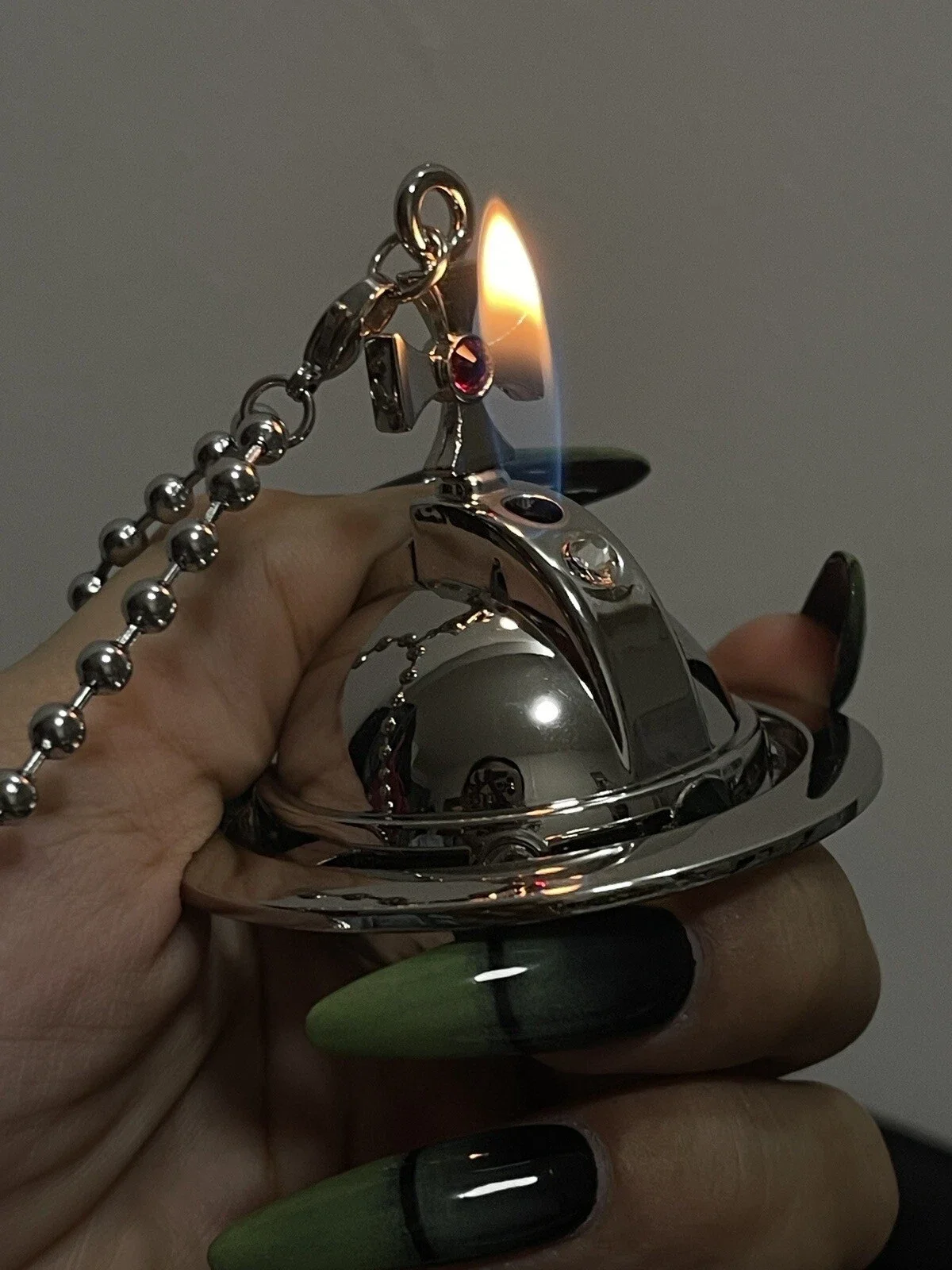
Information on the true Vivienne Westwood orb lighter release is hard to verify. ChicnahueCoatl491 on Reddit offers that 700 or so silver orb lighters were produced and 5,000 or so in gold. Fashion content creator addyharajuku believes 5,000-1,5000 orb lighters were made in both gold and silver. Without delving into the research, I cannot verify.

It seems these official orb lighters by Vivienne Westwood were produced in the mid to late 1990s and have been priced at $5,000 minimum and hard to find.

They have a VW engraving for authenticity’s sake, a keychain, a case, and a serial number. They often need repairs or are deemed unusable, but they are a cool piece of fashion history to collect regardless.

Many resellers in the saturated market have made duplicates to satisfy the desire to own one. They were made and used as fashion “cosplay” in the mid to late 2ooos. One release of such orb lighters had a Nana branded box and authenticity card. These orb lighters weren’t made with the best materials and often broke according to buyers. Regardless, this unofficial NANA x Vivienne Westwood orb lighter—supposedly made by Bandai—are highly sought after. Their value can compare to the official Vivienne Westwood lighters.

And of course, the third option for fashion buyers is the affordable modern day duplicates found on reseller sites everywhere.

The 25th Anniversary NANA x Vivienne Westwood Collaboration

So October 7, 2025, when Vivienne Westwood announced the NANA x Vivienne Westwood collab, I gasped and also cursed my poor timing. A release of NANA x Vivienne Westwood fashion at the SAME TIME as my upcoming trip to Japan? Not only is that iconic, but terrible for my already poor finances.

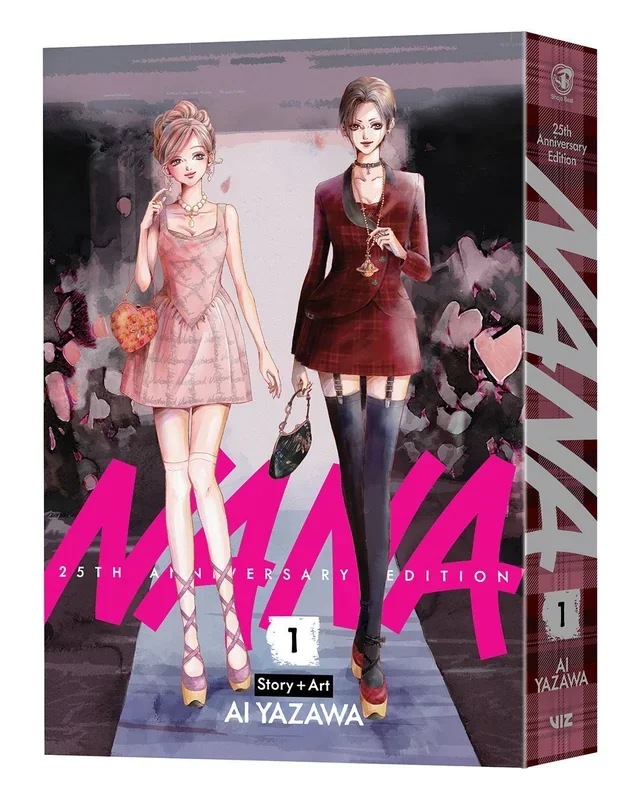
However, it is not a fashion drop—yet. The collaboration release celebrates the 15th anniversary with a special edition volume of NANA with a new illustration from the creator on the cover and a Vivienne Westwood style plaid sprayed edge. According to Elle, the joint release will include two waves—the second of which should be in December.


I can’t help but wish as a selfish fashion girlie for some limited edition jewelry, over the knee socks, TIGHTS. Some strawberry designs, a plaid punk beret with spikes or pins, and god, please, a canonized orb lighter (that is less than $2000).

There is still time for the fashion to be announced. It’s only been seven days LOL. But I beg of you, RELEASE THE FASHION.


“The dreams we are chasing and the reality that is chasing us are always parallel; they never meet.”— NANA


NANA


Genre: Shoujo Manga

Author: Ai Yazawa

Publication: 2000

Warnings: Heartbreak

Rating: 5/5


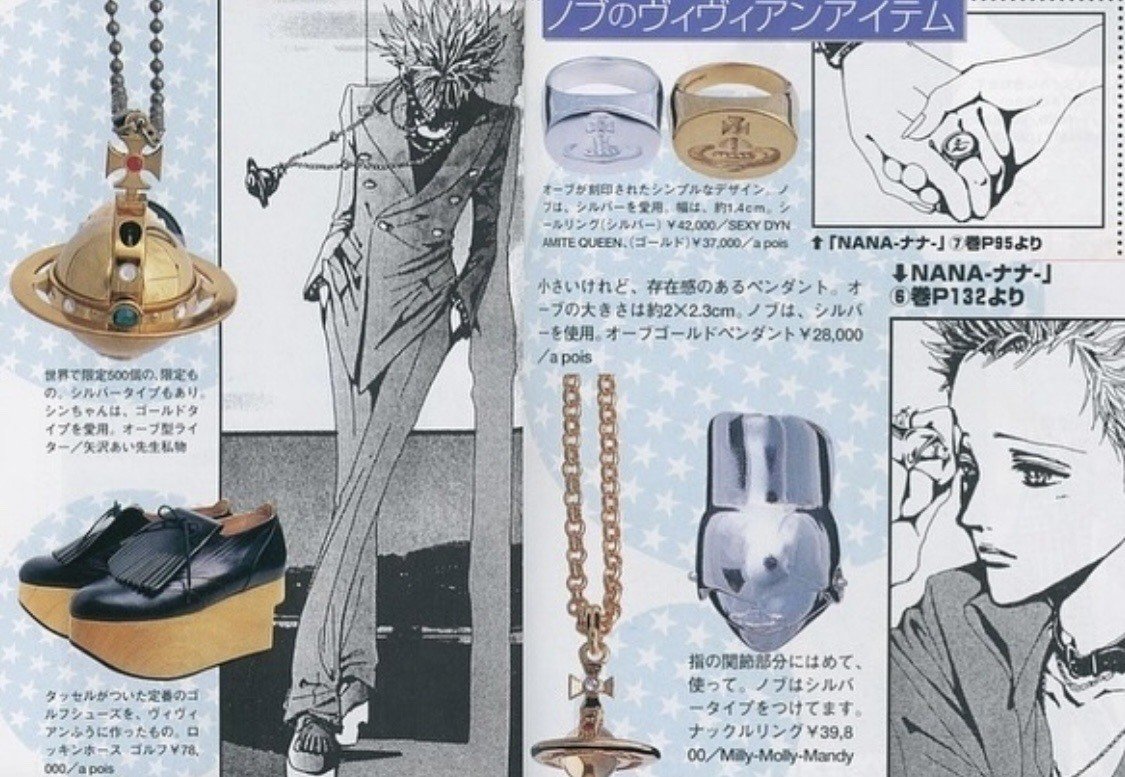
NANA x Vivienne Westwood advertisement from Volta.


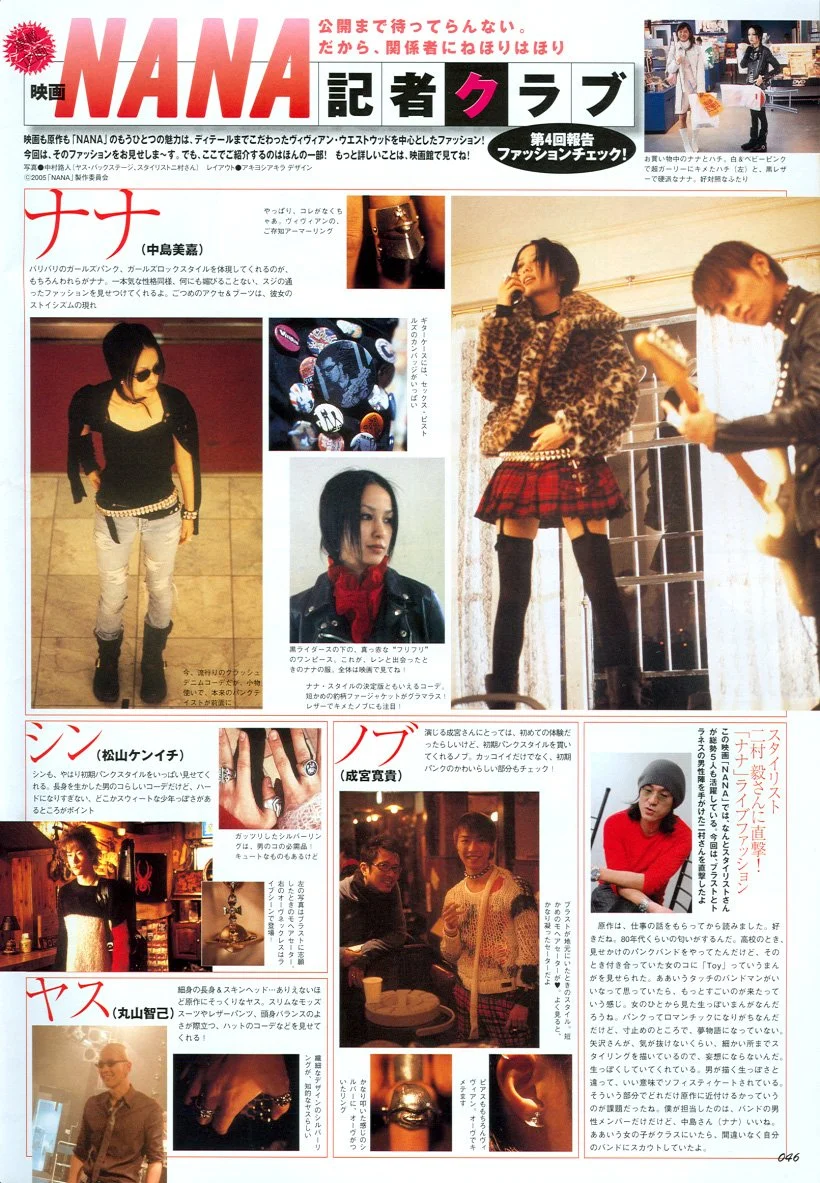
NANA x Vivienne Westwood advertisement in Kreg Magazine 2003.


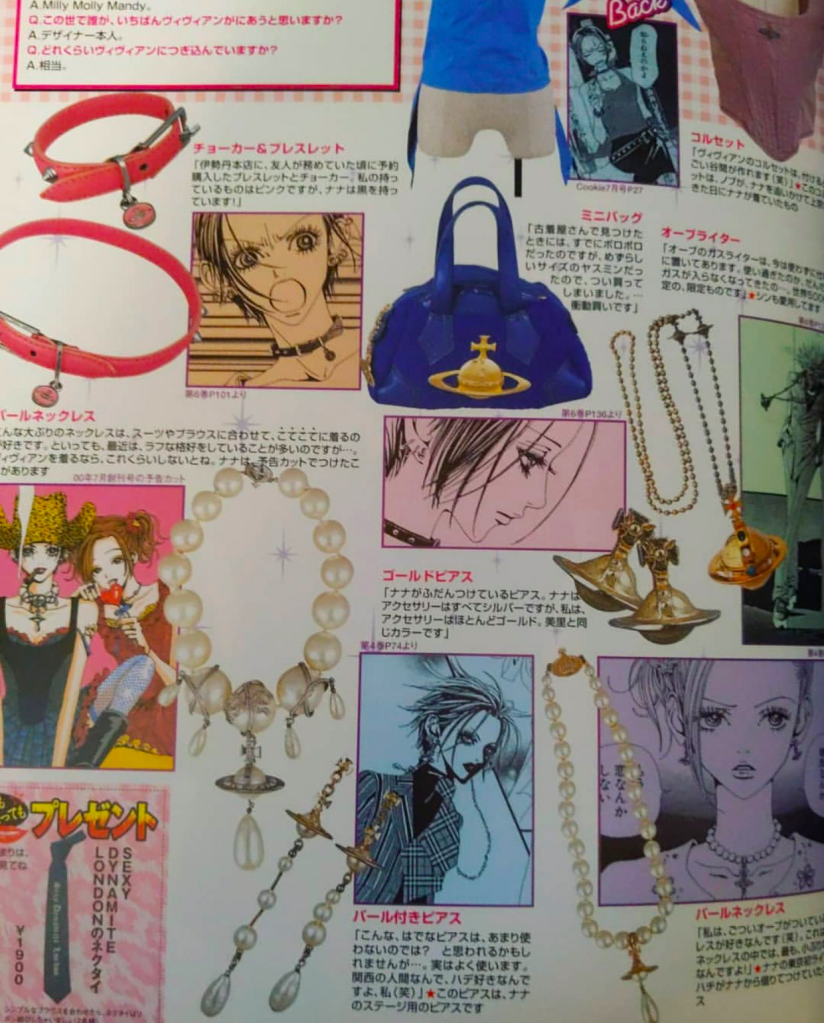
Kera Magazine 2000~Nana Osaki’s style.


Modern Orb Lighter Replica from Ebay (rebijouboutique).


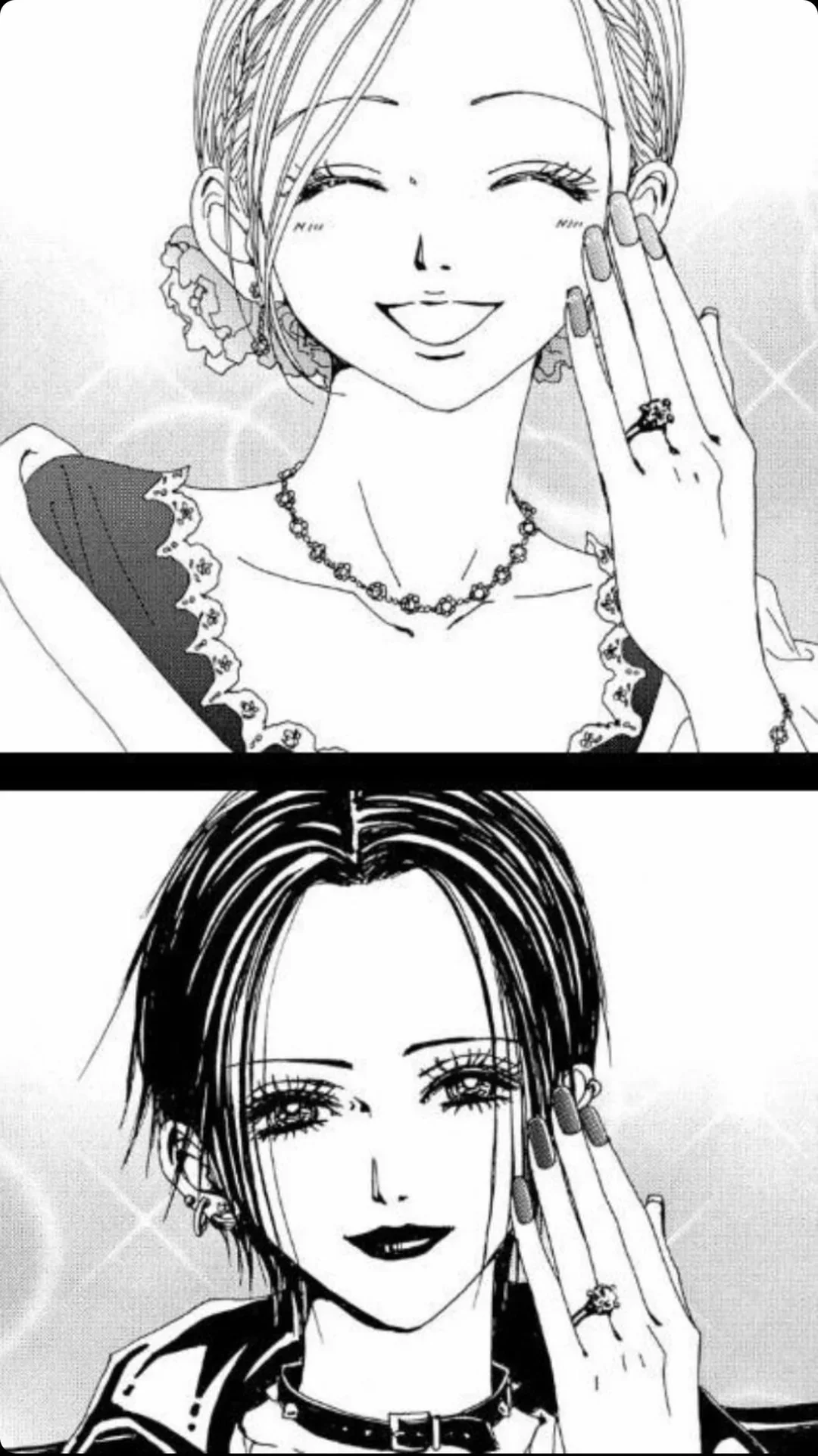
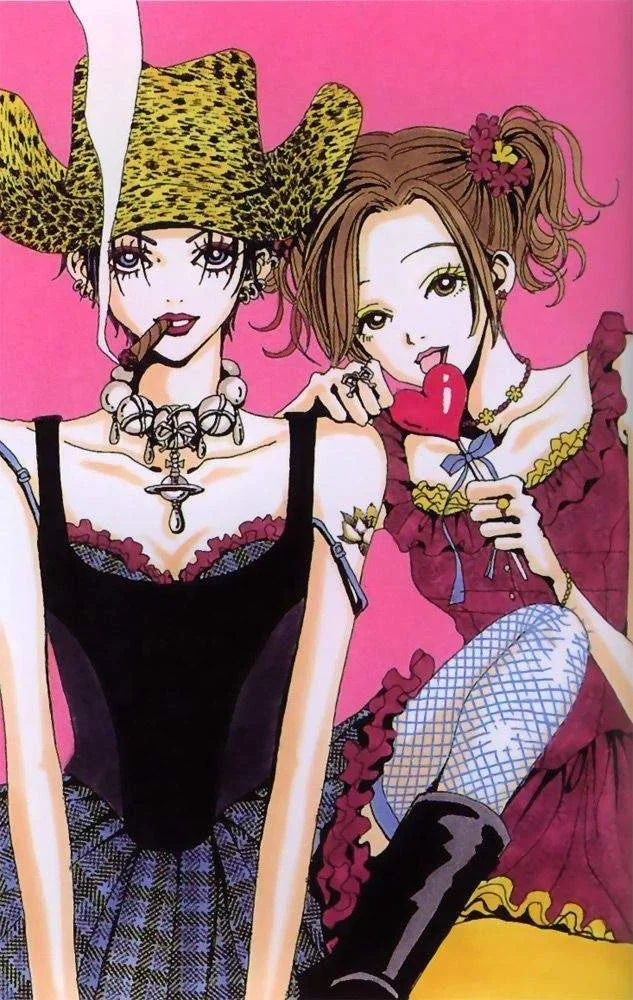
Nana Komatsu and Nana Osaki.


Nana Osaki and Nana Komatsu.

Wednesday, August 20, 2025

Black Flame: The Natural and Unnatural Rear their Ugly Heads


Black Flame


The Natural and Unnatural Rear their Ugly Heads

As someone who doesn’t often read or watch horror, I was exploring new territory with this exploration of sex, the occult, and gruesome imagery.

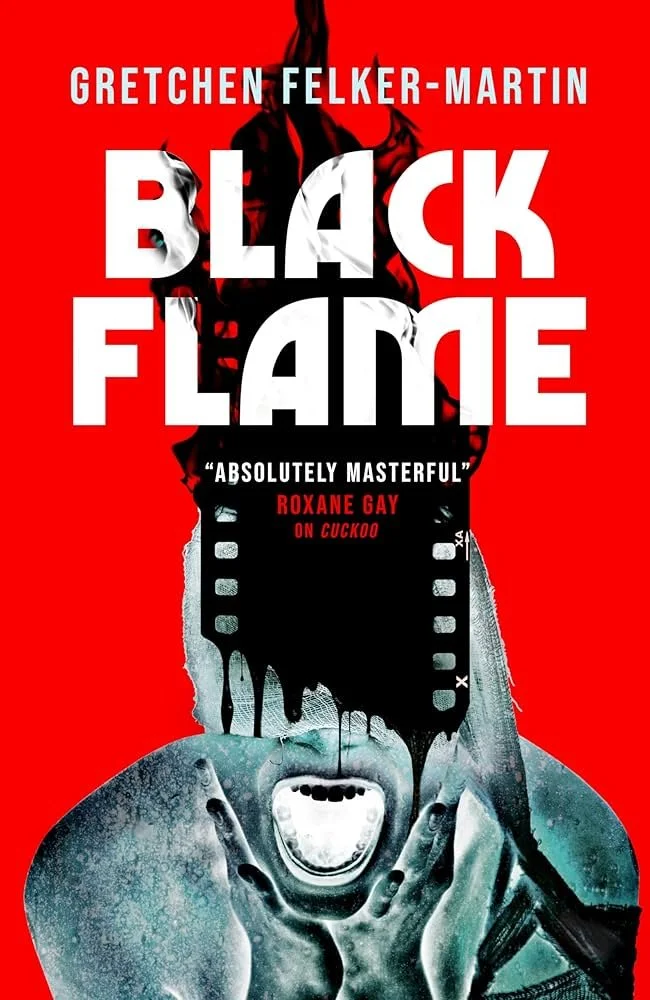
While most will know Felker-Martin for her previous works Manhunt (2022) and Cuckoo (2024), I had yet to discover this author’s work until the cover art of Black Flame caught my eye. Much like the haunting of the main character, this dust jacket’s visual gripped me and held on. A week later, I was compelled to purchase it. 

Black Flame is the third novel Gretchen Felker-Martin has written, published August 5, 2025. Fans of the author claim on forums that Black Flame is Felker-Martin’s best work yet. Critics of Black Flame call it purposeless sex, with a boring character and too much violence. As an amateur reader in the horror genre, I am ill-equipped to contrast this novel with the classics. But I can easily give my reaction in a vacuum. This novel disgusted and intrigued me, and I would recommend it if you are feeling up to an uncomfortable read.


Themes: 

Sex, Gender, Horror, Family Issues, Queerness, Film, Unreliable Narrator

Summary: 

In under 200 pages, main character Ellen Kramer leads us through her desolate day to day life. She is a Jewish film restorer who does nothing but repress her desires. In her early thirties, she is isolated, depressed, and only finds bliss in her mindnumbing work in restoring film at her bleak job. Surrounded by people who throw around their anti-semitic opinions and lazy nepotism carelessly, she finds little purpose in life. 

Ellen is not only a disappointment to her parents for having a girlfriend in college fifteen years prior, but a disappointment to herself for abandoning said ex-girlfriend to denounce her sexuality and appease others. Soon enough, Ellen's lack of desire in life is starkly juxtaposed by her jarring sexual fantasies. 

Ellen’s newest project at work is a long-lost and damaged film by Karla Bartok, a Jewish director who stars in his production in drag. The Baroness is his role, and within the Baroness’s castle, a 17-18 year old boy is sexually ravaged throughout the harrowing film. Faceless creatures and sexual nuns swarm flesh in this fortress. The human creatures eat with stapled mouths, hungry for flesh both sexually and to satisfy their stomachs. This dark film relays unnatural and forbidden acts. It’s easy to wonder…why was this plotless film made? What meaning could it possibly have for an audience? 

While Ellen restores this piece, she is subject to strange dreams, life-like hallucinations, and the wildest sexual fantasies. Is the source the film, or Ellen’s denial of her natural urges? Ellen’s passive and bleak life comes to a dark and uncontrolled head once the film grips her. Losing her grip on reality and desperate to keep herself hidden, she is made an example for the readers to interpret.


Review:

Some readers online say the shock value of the gore and sex are sensationally pointless. But for Ellen to reach the point of no return, she must face the most uncomfortable truths within her. For her lustfilled craze may be prescribed unhealthy or gross to the readers, but it is the culmination of repression, self-hatred, shame, and ultimately, the source of all lifelessness in Ellen’s life. True freedom from this haunting of the film is her freedom from the opinions of others. Ellen’s happiness was lost upon her in her struggle to be an unattainable pride for her family, and her constant self-hatred brought from fifteen years of pointless agony. 

While it could be a hard read for many readers (horror-gore, sexual assault, anti-semitism and anti-lgbtq+ comments), it may be worth the read if you’re able. Even though the events were grisly, its comparison to the joy that can be found outside those horrors was a refreshing reminder. 

This novel is a recommended read for all the people who are scared to live their life the way they desire.

Do you want it? 

Do you know what it may represent for you?

7/10. I’m not much of a horror-reader, but it gripped my attention. I loved the tight writing and the claustrophobic focus on Ellen’s point of view.


“Do you want it?”
— Black Flame
Black flame cover. Grey and black background with blue letters for the title. a woman with shortly cropped hair and yellow blank eyes has film reel in her mouth and coiled around her neck. her eyes drip tears of blood. "Do you want it" written near.

Black Flame

Genre: Horror

Author: Gretchen Felker- Martin

Publication: August 5, 2025

Warnings: SA, violence, anti-semitism and anti-LGBTQ+ comments, death, nudity, horrific imagery, mature themes

Rating: 4/5

Black Flame cover with white letters for the title and red background. A figure screams with their hands on their chin and gauze wrapped around their eyes and top of nose. Their image is reversed in negative color and a black flame and film above.

UK cover of Black Flame.

Thursday, July 10, 2025

 Jul 10 

The River Has Roots is the latest publication by Amal El-Mohtar, the author known for This How You Lose The Time War, co-written with author Max Gladstone. Critically acclaimed and loved by fans, El-Mohtar set a standard that would be hard to follow up her sci-fi LGBT Romeo and Juliet.

Thankfully, she was successful. She pairs a queer romance with a beautiful tale of sisterhood and magic. And, she weaves into her story my favorite element of all.

Translation.

In this story, magic is not just waving a wand and casting a spell. It is grammar. Grammar is transformation. It is movement. And it is the flow of a river whose course may even reverse…

The Professors are two willow trees that run along the River Liss, where the Hawthorn family resides and prays, thankful for the magic from the trees that let their business flourish. Esther and Ysabel are the two sisters of the Hawthorn family and share a tight bond and a love for singing. They sing to the Professors daily, and their devotion to their sacred duty is honored.

But when Esther gets constantly followed by Samuel Pollard, the boy who cannot take a hint of her rejection for love, the tale takes a twist. For Esther has been seeing in secret an Arcadian named Rin, the faerie that lives outside of the safety of the Modal Lands and Thistleford. They live in the place beyond the river, where time and grammar shapes things… differently.

Rin is the snow, Rin is the fragrant woodsy atmosphere, they are everything in constant movement and everything at stillful peace. Rin takes different forms to visit Esther in her lands, and her sister Ysabel is eager to meet him. But Ysabel is also wary of Esther’s desire to return to the land of Arcadia where they once became lost as children. And Rin may be who leads her away.

While their past venture into Arcadia was filled with fear, Esther still gazes towards the land with longing, and Ysabel keeps her distance. And while Ysabel favours murder ballads to gleeful songs of sun, she does not wish for any harm to come to her sister from Arcadia, or from the mysterious Rin who poses to her the greatest threat of all.

Final Thoughts:

The River Has Roots is poetic, mystical, and a perfectly crafted tale of intrigue and folksy magic in a bookish era of cut and dry elven lore. Compared to the mass of fantasy romance trends in the past decade, El-Mohtar refreshes the genre with poise and queer love. And the unique translation of grammar magic in accompaniment of the beautiful prose El-Mohtar births is more than satisfactory in this tale of love, murder, and sisterhood.

For anyone who loves swans, harps, or mythology, you already know which book to choose for your next read.

And bonus: it’s less than 100 hundred pages.

“But that is the nature of grammar—it is always tense, like an instrument, aching for release, longing to transform present into past into future, is into was into will.”

—The River Has Roots

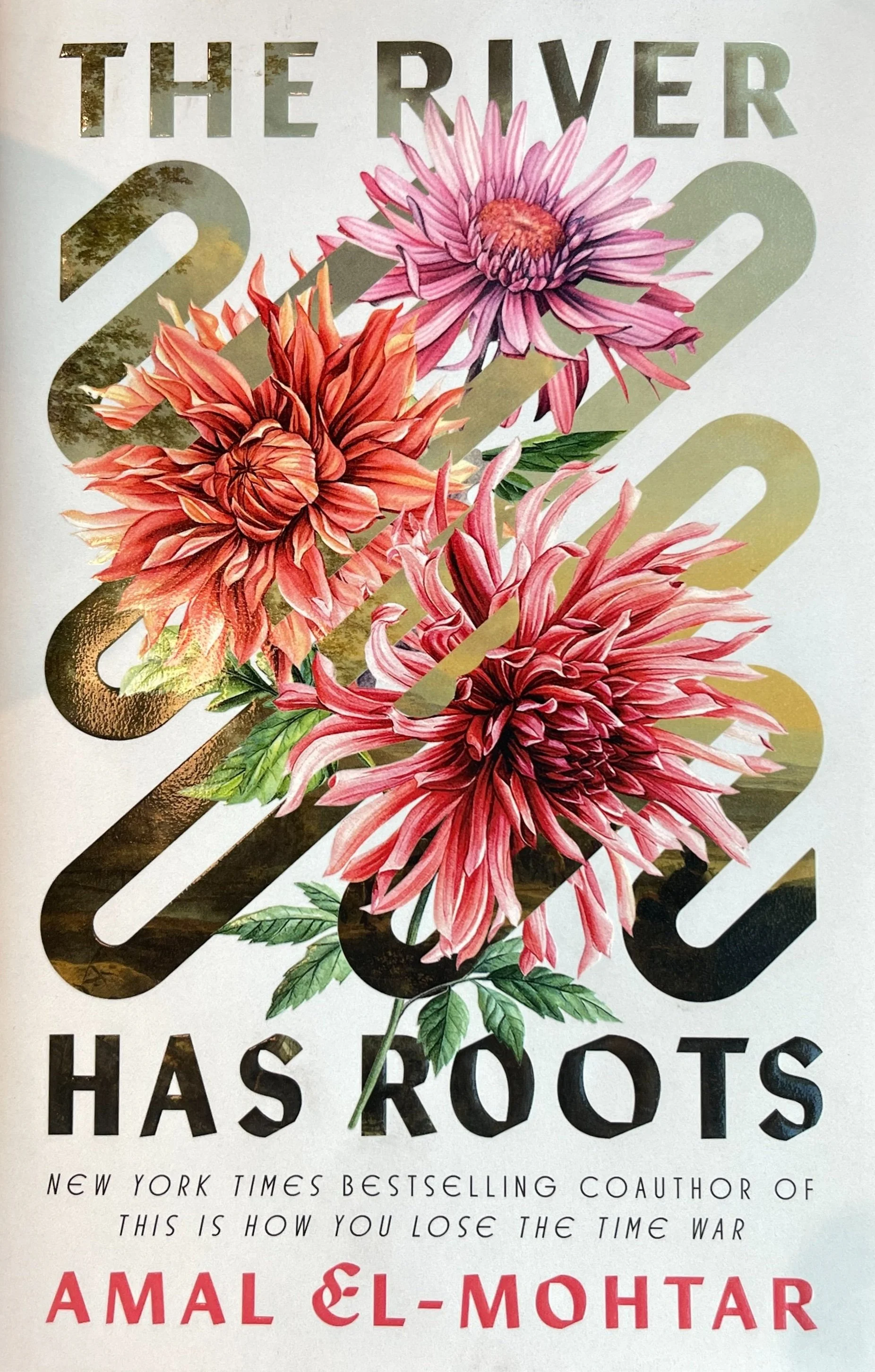
Cover of the book, with pink and orange flowers. The background is grey, but a diagonal squiggle weaves in and out, showing a landscape of grass and sky.

The River Has Roots

Author: Amal El-Mohtar, known for This How You Lose The Time War (2019)

Genre: Fantasy

A woodcut image of a river merging into a clove of trees. Two willows are perched on either side of the river and their vines hang down.

Illustrations by Kathleen Neeley. Instagram: @kathleep

A woodcut image of a harp submerged in water. Leaves align the top of the image, and kelp grows along the bottom.

Illustrations by Kathleen Neeley. Instagram: @kathleep

Thursday, February 20, 2025

Babel - R.F. Kuang Review

TLDR: watch my YouTube video here: anti colonialism harry potter?

Babel by R.F. Kuang is a historical fantasy novel set in the 1830s at Oxford. It follows Robin Swift, a Canton born orphan who is taken by his white father Professor Lovell from cholera ridden China to England. There, he trains to become a student at the Royal Institute of Translation at Oxford Univeristy. 

In this fantasy version of the 19th century, the world's technology advancement and industrial revolution is led primarily by England, where silver is used by the translation alumni's pseudo-magic translation and incantation to power the tech around them. By engraving two or more words on these silver bars in two different languages, the user can evoke a reaction. The reaction is fed by the lost translation that occurs between the two words. For example,

"invisibility" (English) paired with "wúxíng" (Chinese, meaning "intangible") allows the holder of the bar to become invisible.

Or: "dissolve" (English) paired with "bhintte" (Sanskrit), which disperses a crowd.

In order for this magic to function, the speaker must be a fluent speaker of both languages. That's what the students of the Royal Institute of Translation are there for. They use their native languages, English, and the ancient classical languages they studied in as children-led by their guardians- and the curriculum at the institute to pass their fluency exams and become tools of the British empire to reinforce their power and control over competing countries.

While becoming a ruthless empire of silver mining, the elite class maintain control over the educated minority, foreigners who are welcome in the institute as long as they do not critique the colonization required for the silver magic system, the racism they face, and basically anything offensive" to their sensibilities. Very quickly this unspoken rule of "stay in line and do not speak if not spoken to" is learned by the cast of the non-white characters, and while they do defend themselves against their fellow students on occasion, and engage in classes with professors who have a passion for the foreign qualities in languages (but not much else), they are constantly reminded of their place in a racist society and the subservient nature they must conform to in order to retain their privileges of studying at the university. After all, the white elite in history and the novel are accepting of the people and product of the "other" as long as they can profit from it and keep them subjugated.

The upkeep of the silver bar technology is not only a product of this subjugation, but is willfully kept in a cycle of obsoletion, so that any bar that is installed must be re-powered in the future. Otherwise, it fails. And to keep bridges from falling or keep carts motorized, this must be done. Of course, this unsustainable element was made so that the white educated elite capitalize on the industry and make more profit. 

And capitalism and imperialism have historically relied on exploitation of foreigners and their hard work, with little to no regard for their humane treatment. This powerful message of Babel is not lost upon the readers, and thematically, the novel is rich and needs to be recognized for its commentary on colonialism, and the power translation has and does have in dividing and unifying people of all countries in many aspects. 

While I loved this book on my first read, excited to delve into a linguistic heavy novel and appreciate the detail and depth of etymology and history, there are a few critiques I have after rereading the novel this year. Unfortunately, I think the novel had potential in more than a few areas. 


My first critique is of the characters.

POOR CHARACTERIZATION

We are introduced to the Golden Trio Plus One of Robin, Victoire, Ramy, and Letty.

They all speak English and learn ancient languages necessary for the institute like Greek. But Robin speaks Mandarin and Cantonese. Although he's told to forget Cantonese because it's a "lesser language" basically. 

Ramy was born in Calcutta India and speaks Persian, Urdu, and Arabic. He was taken from his family by Sir Horace Wilson to live in Yorkshire before attending Babel. He is the stereotypically biting character of the group, characterized by a sharp sense of understanding and the bitterness that comes with being attuned to one's surroundings. He is usually treated worse than Robin in society because Robin can pass as white in some circumstances, and has a familiar understanding of colonialism since he is from India where the British Empire colonized.

Victoire was born in Haiti and speaks Haitian, Creole, and French. She spent a lot of time in France before coming to Babel, and as a Black woman attending the university, she was victim to racism, sexism, and misogyny. Even the only woman professor of the school told her that her position at the school was not an inspiration of overcoming a society that disregarded women and believed them incapable of education, but rather a sole product of her hard work. Discounting the experiences of Victoire and belittling her aspirations in a society where she is obviously often ridiculed and overlooked.

Letty was born in England and speaks French and German. Letty is the only white character in the group, and it is made obvious over and over that Letty does not have the capacity to think critically or realize the depth in which her "friends" experience racism and are ostracized from society except in the most shallow of ways. She is more concerned with feeling left out from their bonded experiences, despite also feeling the effects of misogyny in society and overcoming the challenge of attending Oxford as a woman when both her father and society was not keen on the idea. 

Unfortunately, the characters feel stereotypical, as narrative devices meant solely for delivering lines necessary to the plot or a message, but without complex motivations, feelings, or dynamics. Their interactions were painfully reminiscent of another media, and felt like a shadow in the background of the plot. Which leads me to my next critique: 

Babel often read as a Harry Potter inspired novel with poor execution in the ways it resembled.

First, we have the Golden Trio Plus One of Robin, Ramy, Victoire (and Letty):

with Robin being the burdened and unsure Chosen One meant to lead a revolution against the oppressive regime threatening the oppressed half-bloods and muggleborns... 

Ramy being the boisterous and opinionated side-kick that at least, thankfully did not read as a Ron copy...

and Victoire, the aspirational woman who is told she is not meant to be part of a society that sees her as undeserving of her station, despite her intellect and right. (comparable to Hermione and her muggleborn status). 

Additionally, the two sentence hint of romantic interest between Robin and Ramy shadows a brother-bond of Harry and Ron that leaves Victoire (Hermione) feeling like she belongs in the trio, but will fall third in an argument, seen as "too bold" when the two are both 1) not a woman seeking support when her two best friends are boys and 2) not facing the intersectional struggle of both being a woman AND being Black (muggleborn) in the society.

Despite the Golden Trio dynamic going on, we have the obvious academic living arrangement comparable to Hogwarts, with academic rivalry (most notably against elite rich white kids that are only there because they are expected to be before entering in a cozy career already warmed for them), classes, and adventures that give them a bond and makes the readers care for them.

Sorry, I would mean that last sentence, but the "adventures" we have in this novel is strictly a few paragraphs every so often telling us that the trio cook their favorite dishes together and laugh into the night, and share conversation but not going much deeper. 

That is what I am missing in addition--the fantastical element of the fantasy genre that leads you on a suspenseful journey with the characters, one where you dodge curses and sneak out at night to free a strange bird. Here, the sneaking out occurs, but not in a way that gives you a sense of friendship bonding or mending of those bonds due to high tensions. It leaves the reader wanting. What it also lacks in that regard is the time meant to develop said Harry Potter dynamic and cataclysmic reaction from betrayal. Because the novel (550 pages of dry academic studying and sneaking (didn't say I didn't enjoy the dry linguistic explanations) is

RUSHED

Time skips are abound in this novel, and since it opens with a child version of Robin venturing to England, we are not expected to be privy to every single day of his life until his entrance into the University. But for the characters to feel real, and the betrayal of one character in particular to feel shocking, we should be allowed some momentous and emotionally heavy tension between the characters that come with dialogue, rising and falling action, and periods of nostalgic rest that will connect with the readers and make them feel like a ghost on the shoulder of the character. 

By far, the most interesting characterization is the hint of a romantic feelings between Robin and Ramy in two instances: 

"The light made Ramy's eyes glow, made his skin shine like burnished bronze. Robin had the ubsurd impulse to place his hand against Ramy's cheek: indeed, he'd half lifted up his arm before his mind caught up with his body.

and when discussing Letty's interest in Ramy: 

"Robin: "She wants you. Very badly. So why-"
Ramy: "Don't you know why?"
Their eyes met. Robin felt a prickle at the back of his neck. The space between them felt very charged, like the moment between lightning and thunder, and Robin had no idea what was going on or what would happen next, only that it all felt very strange and terrifying, like teetering over the edge of a windy, roaring cliff.

By far, this is the most subtle the book is, and I wish it were honestly a little more subtle. Simultaneously, I appreciate this is the most complex dynamic amidst these characters.

Often, "the academic year would fly by"-you would be told this-then that "they crammed for finals" and then "he would spend a summer abroad" that would be told in a paragraph or two without having the experience form him as a character. We are told of the passing of time, but do not feel it.

I have seen some authors do this extremely well, with dialogue, with characterization that gives the characters a 3 dimensional quality, gives the reader a sense of nostalgia when thinking back on the characters' experiences, and here, I was let down. I understand the author is rushing towards the plot, but it felt rushed when it had potential. The ending 200 pages had the most tension and interest, but it made what came before seem both heavy with words and light with significance.

There was little grey morality to be had, little philosophy to be discussed until the end, when you must decide if revolution can occur peacefully or with violence. Professor Lovell, as one of the white elites in the book, would obviously be filled with hate and make the reader aware of his participation in corrupt and racist ideology. But the characters miraculously were already clued in to the good versus evil of the world, free from their own mistakes, all knowing in the realm of misogyny and racism, or no knowing in the case of Letty). There was potential for a complex discussion of inherent racism or misogyny, or for Letty's character to engage and then fall short. Rather, Letty did not engage at all, and her betrayal was predictable since her introduction. Another evil white character that cannot be trusted. And while I think that is accurate for the time period and the message, I cannot help but appreciate the conversation that could have been had if her betrayal had more...meaning. 

We knew she did not and would not understand them and the necessity for change whether violent or not. 

It's stated very early on:

"Later, when everything went sideways and the world broke in half, Robin would think back to this day, to this hour at this table, and wonder why they had been so quick, so carelessly eager to trust one another. Why had they refused to see the myraid of ways they could hurt each other? Why had they not paused to interrogate their differences in birth, in raising, that meant they were not and could never be on the same side? But the answer was obvious--that they were all four of them drowning in the unfamiliar, and they saw in each other a raft, and clinging to one another was the only way to stay afloat".

And that's my next critique.

Telling Instead of Showing becomes Foreshadowing? I know how it all ends...

Don't get me wrong. A book about colonialism and racism will need to have racism. It is important. Maybe even every five pages once you start noting every racist event with sticky notes. I have no problem with that. 

What I do have a problem with is how a statement will be made in this book, and without letting us sit with it, and engage in thought, the next sentence will explain what the previous one meant, why it was there, what is stood for, and the exact motivation behind it without any participation by the reader.

There's no need to infer character motivations, when it is literally spelled out the sentence after a character's behavior.

No need to have the reader reflect on their own ideology or emotions when reading words that evoke strong emotions, or wonder how the previous sentence will move the characters into pathways for the plot. Because it does become

very cut and dry predictable.

This partly could be due to the hyper intent on historical accuracy that can make creativity less easily woven into the story. While I enjoy linguistics so I didn't mind the dry academic essay quality or the philosophical musings of the professors or the students at times, it didn't give me a reason to care about the characters more than "they're treated badly, I hate that society is hateful and full of racist bigotry".

The novel is more of a message and less of a character driven story.

No subtlety, no morally grey aspects present in most dark academia that would let readers discover their own questions, contemplate their own behavior, nuances. The message was not packaged in between the lines. The message was the lines. And it was the characters speaking the message because that was their only purpose. Not fleshed out in moments except to contribute to the plot.

Very black and white. Good versus evil, no morally grey philosophy which i think would have perfectly fit the dark academia vibe.

There are just some things that were there for effect. 

Which police officer gave Letty their gun and let her run in to say some words to her former friends explaining why she betrayed them and then let her fire the weapon? Who allowed a woman to hold a gun before and learn how to shoot it? 

Researched, thematic, the message was right and important, and what the characters represent is important, interesting concepts, but felt like it had more potential. 

I wanted to see snippets of the Hermes Society's impact without knowing who the Hermes Society is, wondering where his friends went off to conveniently, just to be shocked to learn they were actually part of the organization, etc. 

I loved the parallel between Robin and his older brother Griffin, showing how Professor Lovell's treatment of the boys differed, and how they became different people with different ideas and different views on how to act in the face of oppression. Their argument on if violence is a necessity, and the development of Robin as a revolutionary character was so important. But his 360 ideology felt rushed to me personally.

Well, that's my critique. 

Keep in mind the author studied at Oxford, is a translator herself and has an MPhil in Chinese from Cambridge and an MsC in Contemporary Chinese Studies from Oxford, pursuing a PhD in East Asian Languages and Literature at Yale University, and was only 28 years old at the time of publishing this critically acclaimed book.

I am a picky reader, and I also like discussing books. And I very much gave this book 5 out of 5 stars my first read (despite the fact the magic system is only a replacement for technology rather than an addition to it. This book was one I read twice and enjoyed twice.

Thursday, December 19, 2024

Basara Review

BASARA


TLDR: watch my YouTube video here: BASARA manga review: hidden gem you should read

*not to be confused with Basara Sengoku, a video game series developed and published by Capcom.

Author: Yumi Tamura (Tam-Tam).
Volumes: 27 (106 chapters).
Serialized 1990-1998.
Warnings: SA, violence, death, nudity, mature themes
How did I stumble across a manga that I would rise above the other mangas I've read? 
A Google search and a click on a forum. 

Most shocking of this discovery is that I don't hear people talking about it. Never heard of it before. Friends who read manga didn't recognize it. But it's somehow the best enemies to lovers romance I've ever read, with some of the coolest characters on the cast.

Adapted into an anime aired locally in Japan: "The Legend of Basara", a thirteen episode airing in 1998 that covers volumes 1-5. I was hesitant to read it because I don't read a lot of manga with an older style of artwork. I'm very glad I went beyond the doubts. I haven't watched the anime, but I will. I hear it's pretty loyal to the manga.


Themes: 

Unity, Betrayal, Loyalty, Morality, Revolution, Politics, Gender + more...

Summary: Sarasa, a young girl living in a Japan reduced to barren lands, leads a revolution disguised as her brother Tatara. The prophet Nagi had declared that Tatara was the one to lead Japan's revolution and bring down the monarchy. The lands are divided between the Red King, the Black King, the Blue King, etc. So when Tatara is beheaded by the Red King's army in the first volume, and the enemies see him alive in the next minute, they are fully convinced the prophecy is true and Tatara is a crazy serious threat. But Tatara is in fact, Sarasa, his twin sister, utterly distraught over her brother's death. Amidst the madness of battle, she takes up his name and tries to lead everyone to safety, beginning a journey for revenge against the monarchy and a hatred for the Red King, while simultaneously creating a friendship with Shuri, a stranger who appears and declares himself a wanna-be merchant (He's literally the Red King). They keep crossing paths with each other, exchanging letters, and little do they know for almost the entire series that the other is their nemesis. Actively trying to desperately kill the other and their allies.  

Sarasa begins a quest to collect the four treasured swords divided across the lands of Japan. Only with the swords and allies gained from their retrieval will she become successful. The story has characters you hate, love, kind of hate but you're rooting for, characters with disabilities, intense revenge-fueled dreams, and more.

Japan's state of a nation doomed without intervention, and the characters often philosophize about government, democracy, freedom, prejudice, and personal legacy (including characters that are forced to choose between love and country, face enslavement, loss of family, tarnishing of reputation, and more. 

It's got everything: undercover Mulan-figure fighting under her brother's identity, one-eyed roaming dancer who somehow is everywhere and no where all at once, spoiled Zuko character who hates his dad (and also goes through a bald phase), cute messenger owls you're always worried about, grand prison breaks, pirates, deserts, an intense scholar who tries to document the entire thing happening all around, and more.

I especially love that all characters from all sides of the fray either accidentally barely miss the people they're looking for OR come in contact with someone they don't know but we do (Game of Thrones style). One of my favorite dynamics in story telling, actually.

Overall, I loved Basara. The camaraderie reminded me of Avatar the Last Airbender, which didn't even exist at the time of publication; stellar character backstory, growth (or decline), humor, including cute panels where the character expression turns into the most basic of shapes...the art style itself is aesthetic, majestic, not altogether confusing--which is a struggle for any manga reader or artist when crazy battle scenes are happening.

Notably, Tam-Tam introduces characters and very quickly you realize you have a connection to that character, even if it's a minor character or they are barely there. (Then they die. Just kidding). (Only sometimes). And she can establish empathy for even the worst people in some cases...

I would find myself waiting to see the continuation of one character's journey and annoyed at a newly introduced character, and within a few panels I wouldn't mind at all because I'm interested in this new one. A rare talent in my opinion. Some people online critiqued the large amount of characters and quick changes of place and circumstance. It can get confusing since there are so many people involved and since they can show up in different regions from when they were introduced, or with different people around them, but it's still amazing.

Tam-Tam supports a commentary that anything can be accomplished, even the impossible, as long as there is unification and teamwork, sometimes selflessness, acceptance, and good morals. Trust leads the way, and love conquers. Even if people die and their lover is left alone and vows for revenge, they have a continuing story beyond that loss that shows the power of forgiveness and the sorrow of bitterness. 

Rivalries can be misunderstandings that CAN be rectified, both sides CAN be fighting for their own justice, believed to be the better cause. Good people fight good people, sometimes for the wrong reasons, but also sometimes because they jump too fast into revenge rather than forgiveness.

I loved the main characters, their dynamic, their romance, but mostly their conviction and growth when faced with responsibility, loyalty, and war.

I loved the side characters, the people you only see once, the people you hate, I loved them all. Some were too evil to actually love, but I think they were well created.

I commend the plot twists, as I adore when characters reveal their hidden agendas through action, and sometimes the author would keep something hidden until the right moment of reveal, and a character's actions became clear while upping the stakes. 

Mostly, I loved the portrayal of gender and women in the story. Sarasa was a character the likes of Jo in Little Women, Elizabeth Bennet in Pride and Prejudice--I do not even have the words to describe how she battles the dynamics of responsibility caught in between leadership and responsibility, expectations as a man and woman, while staying true to herself and those around her...The women in the story were victims of war, greed, or station, powerful wives or powerful weapon-wielding girls with dreams and complex stories. 

And I don't have words for Ageha at this time. He is by far one of my favorite characters to date. A man of the wind...

Once you get to the finale, there are extras: 

-characters side stories/history 

-events after the finale

-events preceding the first volume, generations ago, with the first insurgency of Japan and the meaning behind the title Basara...

10/10. Thank you Tam-Tam.

Friday, August 2, 2024

Basara: The Hidden Gem of Manga


Basara: The Hidden Gem of Manga

TLDR: watch my YouTube video here: BASARA manga review: hidden gem you should read


How did I stumble across a manga that would rise so high above the other mangas I've read? 

A Google search and a click on Reddit. 

The most shocking of this discovery was that I had never heard anyone in my circles or the vast Internet talking about it. Friends who read manga didn't recognize it.

But it's somehow the “best enemies to lovers romance in manga” according to the forums, and I will say that it in fact lives up to its acclaim. Not only is it the best enemies to lovers I’ve read, but it features some of the coolest characters on the cast.

Adapted into an anime aired locally in Japan: "The Legend of Basara"* was a thirteen episode anime airing in 1998 that covered volumes 1-5 of the manga. Upon first glance, the older style of artwork from the early 2000s can cause one to be hesitant to dive in. But pushing through the doubts will award you with a spectacular adventure. And bonus; fans claim the anime adaption is quite accurate to the manga.

*not to be confused with Basara Sengoku, a video game series developed and published by Capcom.


Themes: 

Unity, Betrayal, Loyalty, Morality, Revolution, Politics, Gender + more...

Summary: 

Sarasa, a young girl living in a Japan reduced to barren lands, leads a revolution disguised as her brother Tatara. The prophet Nagi had declared that Tatara was the one to lead Japan's revolution and bring down the monarchy.

The lands are divided between the Red King, the Black King, the Blue King, etc. So when Tatara is beheaded by the Red King's army in the first volume, and the enemies see him alive in the next minute, they are fully convinced the prophecy is true and Tatara is a severe threat to their rule.

But Tatara is in fact, Sarasa, his twin sister, utterly distraught over her brother's death. Amidst the madness of battle, she takes up his name and tries to lead everyone to safety, beginning a journey for revenge against the monarchy.

This hatred is not complete without declaring revenge for the Red King. And while Sarasa is simultaneously crafting a friendship with Shuri--a stranger who appears and declares himself a "wanna-be" merchant--she is in fact becoming closer to her greatest enemy. For Shuri is quite literally the Red King. These two continue crossing paths with each other, exchanging letters, and little do they know that for almost the entire series that the other is their nemesis, actively trying to desperately kill the other and their allies...

Sarasa begins a quest to collect the four treasured swords divided across the lands of Japan. Only with the swords and allies gained from their retrieval will she become successful. The story has characters you hate, love, kind-of-hate but you're rooting for, characters with disabilities, intense revenge-fueled dreams, and more.

With Japan's state of a nation doomed without intervention, the characters often philosophize about government, democracy, freedom, prejudice, and personal legacy (including characters that are forced to choose between love and country, face enslavement, loss of family, tarnishing of reputation, and more). 

It's got everything: undercover Mulan-figure fighting under her brother's identity, one-eyed roaming dancer who somehow is everywhere and no where all at once, spoiled Zuko-coded character who hates his royal dad (and also goes through a bald phase!), cute messenger owls you're always worried about, grand prison breaks, pirates, deserts, an intense scholar who tries to document the entire thing happening all around, and more.

I especially love that all characters from all sides of the fray either accidentally-barely-miss the people they're looking for OR come in contact with someone they don't know, but we do. (Something I refer to as Game of Thrones style). One of my favorite dynamics in story telling, actually.


Review:

Overall, I loved Basara. The camaraderie reminds one of Avatar: The Last Airbender--which didn't even exist at the time of publication. Enter stellar character backstory, growth (or decline) of their morality, humor, (including cute panels where the character expression turns into the most basic of shapes)...

The art style itself is aesthetic, majestic, not altogether confusing--which is a struggle for any manga reader or artist when chaotic battle scenes are happening.

Notably, author Yumi Tamura, AKA "Tam-Tam" introduces characters that very quickly grab onto you and don’t let go. Even if they are a minor character or they are barely there, they sink their teeth into you. (Then they die). Just kidding! (Only sometimes). And Tam-Tam can establish empathy for even the worst people in some cases...

I would find myself waiting to see the continuation of one character's journey and become annoyed at a newly introduced character interrupting that event. Then, within a few panels, I wouldn't mind at all! Why? Because I'm interested in this new character. A rare talent to execute well, in my opinion. Some people online critiqued the large amount of characters and quick changes of place and circumstance. It can get confusing since there are so many people involved, and since they can show up in different regions from when they were introduced, sometimes affiliating with different people, but with careful backpedaling and focus, it can be more reason to appreciate the diverse exploration of this world.

Tam-Tam supports a commentary that anything can be accomplished, even the impossible, as long as there is unification and teamwork. Sometimes this requires selflessness, acceptance, and good morals. Trust leads the way, and love conquers. And even if people die and their lover is left alone and vows for revenge, they have a continuing story beyond that loss that shows the power of forgiveness and the sorrow of bitterness. 

In Basara's world, rivalries can be misunderstandings that can be rectified, both sides can be fighting for their own justice, believed to be the better cause. Good people fight good people, sometimes for the wrong reasons, but also sometimes because they jump too fast into revenge rather than forgiveness.

I loved the main characters, their dynamic, their romance, but mostly their conviction and growth when faced with responsibility, loyalty, and war.

I loved the side characters, the people you only see once, the people you hate, I loved them all. Some were too evil to truly love, but they were well created villains.

I commend the plot twists, as I adore when characters reveal their hidden agendas through action, and sometimes the author would keep something hidden until the perfect moment of reveal, and a character's actions became clear while upping the stakes. 

And most notably, I commend the portrayal of gender and women in the story. Sarasa was a character one can compare to the likes of Jo in Little Women, Elizabeth Bennet in Pride and Prejudice--I do not even have the words to describe how she battles the dynamics of responsibility caught in between leadership and responsibility, expectations as both a man in disguise and woman in hiding, while staying true to herself and those around her...The women in the story were not solely victims of war, greed, or station, nor solely powerful wives or powerful weapon-wielding girls. They were complex, with unique dreams and narratives that flesh out a beloved tale.

And I do not have the words for Ageha at this time. He is by far one of my favorite characters to date. A man of the wind...

Once you get to the finale of the manga, don't hesitate to continue. For there are extras. Including:

  • characters side stories and history

  • events after the finale

  • events preceding the first volume, generations ago, with the first insurgency of Japan and the meaning behind the title Basara...

Ultimately, with all my passion: 10/10. Thank you Tam-Tam. <3


“Even though he’s my enemy, I don’t know anything about him.

Am I afraid to know about him?

Do I want to think of him as a monster rather than a human being?”
— Sarasa
Basara volume 1 cover, showing a figure at the top of a desert mound in flowing robes, holding a sword behind their back and facing towards a full sun/moon in the distance, with text "Basara" above.

BASARA

Genre: Shoujo Manga

Volumes: 27 (106 chapters).

Author: Yumi Tamura; Nicknamed “Tam-Tam”.

Serialized 1990-1998.

Warnings: SA, violence, death, nudity, mature themes

Rating: 5/5

Volume 9 cover of the Basara manga. Sarasa and Shuri face each other in front of a palace building. Sarasa looks up to Shuri and grasps his purple robe. She wears a yellow robe and flower. Shuri wears a purple hat.  Basara title is above them.

Volume 9 cover of Basara featuring Sarasa and Shuri.

Volume 16 cover of Basara. Sarasa dons a winter coat and boots with pink gloves and a sword. One hand is on the back of the white tiger she rides, the tiger with a bloody mouth as it snows around them. Basara title above.

Volume 16 cover of Basara, featuring Sarasa and the White Tiger (not 2Hollis).

Page from Volume 2 of Basara. Black and white manga art features Sarasa on horse, with arrows being shot at her as nearby soldiers shout in fear of "Tatara", believing her to be her brother. Below, a close-up of her face and a person shouting Tatara.

Page excerpt from Volume 2, showing Sarasa upon a horse amid battle, those around her believing her to be her beheaded brother arisen from death.

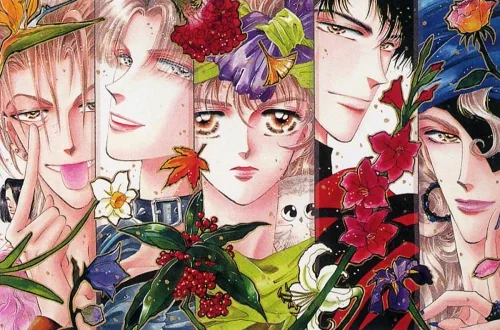
From left to right: Nachi and Hijiri from the Tengu Youth organization, mysterious Asagi, leader Sarasa, Red King Shuri, and queer Ageha of Basara.

Volume 10 of Basara manga. Basara title on bottom and Red King Shuri horizontal, with fireworks in the background. He wears armor bracers and a red cape

Volume 10 of Basara. Featuring Red King Shuri.

Volume 24 cover of Basara. Ageha, an ash blonde-haired man with a black eye patch and an owl wears golden brown robes with shadowy figures in the background.

Volume 24 cover of Basara, featuring troupe performer Ageha and his owl Kagero.

Panel from Basara manga, black and white, with Shuri yelling "Only idiots stay forever helpless victims...don't get used to being oppressed...fight for your right to live!"

Panel excerpt from Basara manga, featuring Red King Shuri.

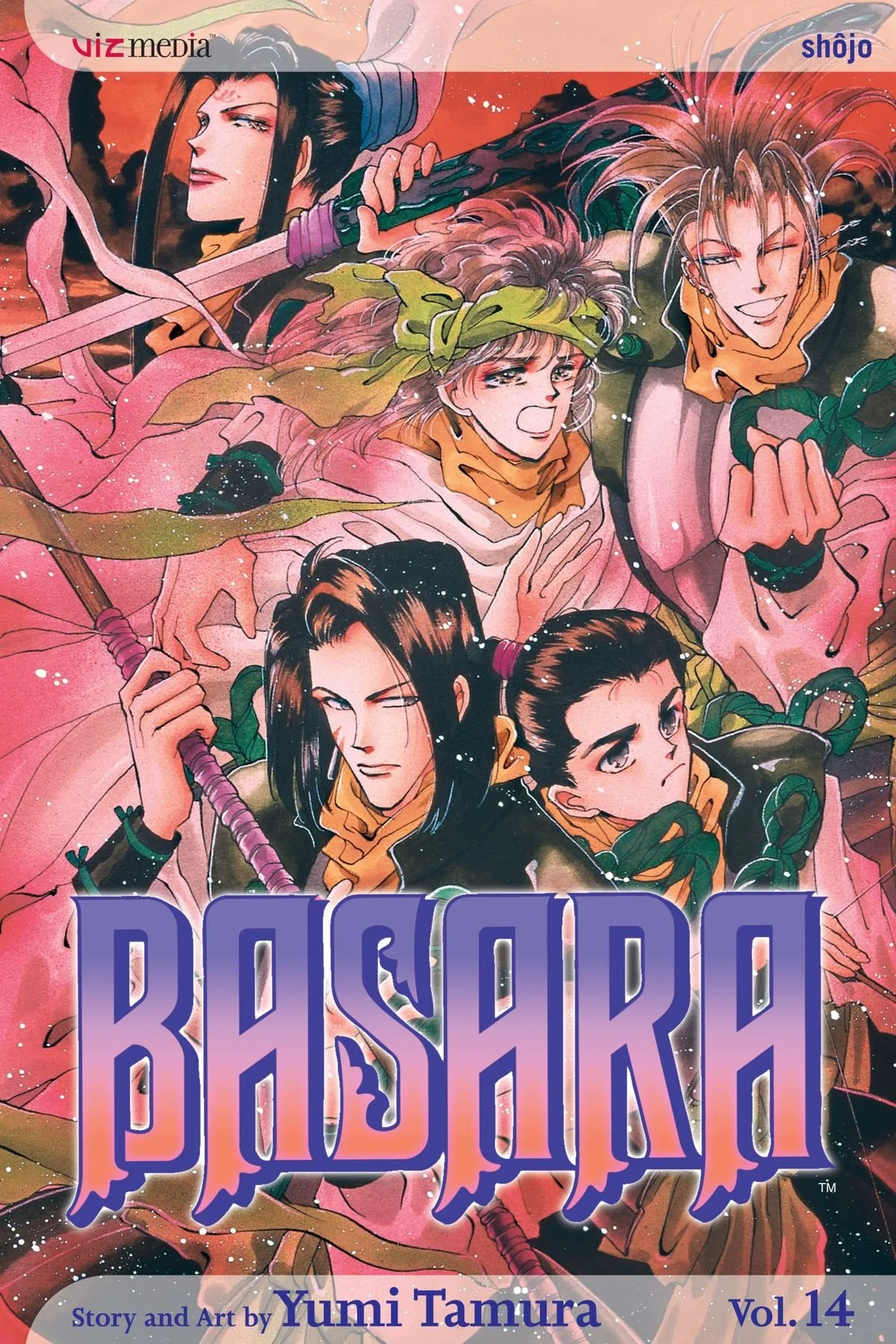
Volume 14 of Basara. Basara title below with three black haired characters, blonde-haired Sarasa, and blonde-haired Nachi.

Volume 14 of Basara, featuring from top left to bottom right: Chacha, Sarasa, Nachi, Hijiri, and Hayato.

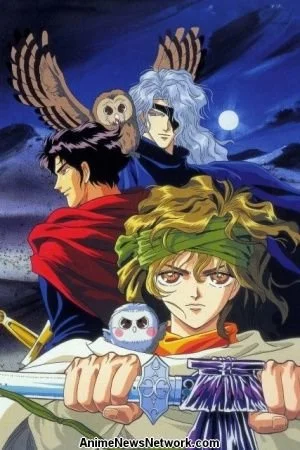
Basara anime photo, with Sarasa and her owl on her shoulder in foreground. She wields a sword. King Shuri behind her looking to the left and facing away with his side profile, and Ageha with an eye patch and owl on his shoulder. Moonlit background.

Anime cover featuring Sarasa with owl Shinbashi, Red King Shuri, and Ageha with his owl Kagero.

The Sothos

fu sothothshosutoth, shufthofoʊshofuthu, tosfshosufuthu, fʊfothofshothf, usoso usufthsu shufot. ushthushfoʊshofushʊthushothoth, fosotshfoʊs...

Popular Posts