BEHOLD THE MAN
Existentialist Jung and Messiah Freud meet Karl Glogauer
Michael Moorcock, heralded for his Eternal Champion archetype and science fiction contributions, should be a staple in the avid readers’ library. While not a household name like J.R.R.Tolkien, Moorcock influenced the fantasy world on an immense scale. He inspired many writers of the world—George R.R. Martin, China Miéville, and the late Dan Simmons to name a few— and his beloved Elric of Melniboné heavily influenced the Witcher series, Warhammer 40k, and many other memorable franchises.
Most readers think of Michael Moorcock and think of his Eternal Champion characters—Elric, Corum, and Erekosë, agents of the Cosmic Balance suffering and hopelessly reincarnating across multiverses. However, there is one novel by the same creator that is not as often discussed. More than deserving in its recognition, Moorcock’s 1966 publication of Behold the Man has earned a unique spot in the history of science fiction's hall of fame.
Behold the Man was first written as a novella in the New Worlds magazine. It was awarded The Nebula Award in 1967 and was expanded into a novel in 1969. Intersecting absurdity, religion, science fiction, and sexuality, the story portrays a martyred character like any of Moorcock’s ill-fated protagonists, albeit a hypocritical one.
Less than two hundred pages long, Behold the Man presents an existential testament to human fallacy and the human need to create meaning beyond suffering. The experience of journeying beside the protagonist is one entertaining aspect of reading the novel, so be warned before you read any further in this article, as I will be discussing some elements in the book that might come as a shock if you are reading it for the first time.
A Man in Search of Meaning
Behold the Man begins with our protagonist Karl Glogauer, a British man born in the 1940s. Karl crashes into the Middle East two thousand years in the past. Suspended in a womb-like liquid chamber and plummeting to the earth (a fallen angel if you will) he is trapped in 28 A.D. alone. The chamber breaks on impact, and we learn through parallel frames of narrative about Karl's aspirations for the time travel adventure. As he integrates into the society of John the Baptist and the Essenes, we become privy to his childhood and education, including insights into his religious upbringing and sexual tendencies. Moorcock’s non-linear narrative weaves a perplexing puzzle for the reader to digest and observe.
Essential to understanding Karl’s subconscious mind throughout the novel is the very first flashback of his youth: It is Christmas 1949 at a school playground, and at nine years old, Karl is crucified. Of course, the crucifixion is a mimicry of the savior's on the cross. It is a game the children devised for fun where Karl volunteered to play Jesus. Tied to the fence with wire in a spread-eagle fashion, Karl becomes panicked and the fun ends. He begs for the other children to let him down, and a sense of betrayal grows within him. His classmates laugh at his suffering and he wonders why, despite sharing his candy and helping them in class, his pleas fall on deaf ears.
Karl pretends to pass out so he can be untied and carried away. His game of pretend could have ended there, but he begins another soon thereafter. This game of pretend will lead Karl down a path of no return, and give readers an exploration of psychological trauma like none other.
Karl's Trauma and Search for Meaning
At four or five years old, Karl’s father spends one last holiday with his son before leaving him behind in his parent's divorce. Karl is brought up by his mother, who gives little attention to the boy’s cries for care. Brought up within Catholicism, Karl gives “lip-service” to the religion, attending church camp and study groups, where his fetishes and messiah-complex develop. He is devoid of a fatherly figure despite the presence of men in and out of the church, and he is ridiculed for showing his emotions. He would often cry and self-isolate, never amounting to the expectations of those around him.
At summer camp in 1950, scalding water burns his leg and he is told to “Be a man!”. The man responsible for this tells the children there that in order to earn pocket money, they must allow him to strike them on the hand or the bottom. Running from the situation, Karl is told again “Be a man, Glogauer… be a man, boy!”. Karl self-isolates and sobs. Ignored by the other children, he is left alone to his grief. The matron suggests cutting off the scab with scissors to make it appear less brutal before his mother’s arrival, and his mother’s letter demanding a refund is responded to with the comment “your son’s a bit of a pansy”.
At the church club in 1954, Karl tries to date a girl named Veronica. Clueless in the realm of affection and appropriate dating behavior, he lunges toward her for a kiss as she tries to push him away. He apologizes and Veronica replies, “You needn’t jumped at me like that. Not very romantic”. Ironically, Karl would be described as having too romantic of ideals by his future girlfriend.
Regardless, Karl is more intrigued by the necklace Veronica wears than her rejection. “She began to walk away, the crucifix swinging. He was fascinated by it. Did it represent some sort of amulet to ward off the sort of danger she probably considered she’d just avoided?”. Veronica enjoyed the insinuation among their friends that thought they had kissed, confusing him more. Karl tries again to kiss her goodbye at her door, but is unsuccessful and her father responds.
When Veronica stops coming to the church club, he was told by a girl there that her father probably stopped it. Karl declares that they hardly did anything, and she says, “ That’s what she said…she said you weren’t much good at it…she said you didn’t know how to kiss properly”. Karl fixates on the silver cross that had laid between her breasts at night, becoming a symbol he would masturbate to religiously.
Not only does Karl fail to live up to the expectations of being strong and "manly" in the face of abuse many times over, but he fails at succeeding with girls early on. He substitutes these real interactions with pleasure using symbols instead, and the sacrifice of real connection for superficial belonging becomes more and more relied upon as Karl grows up.
Karl recounts a suicide attempt at fifteen that leaves him alive but injured in both neck and pride, and again when he tries to light all the gas burners in the house. In a state of panic, his mother breaks all the windows and proclaims it as an accident to the doctor she calls. Knowing the truth, the doctor reaffirms this belief by others that he is seeking attention: “You’re after the limelight, young man…You’re after the limelight if you ask me”. Karl begins to cry and his mother suggests a holiday. But Karl tells her it’s not school, it’s her. She is shocked and wants clarification. Instead of explaining how her lack of affection and neurotic behavior is leading him to isolation—burdening him with bottled-up abuse—he denies himself the relief that transparency and vulnerability would give him and declares it “nothing”.
Then, when he reaches out for advice at fifteen, he meets a Mr. Younger at church choir. “Karl would ask the curate for advice on his rather general problems of conscience. How could he live an ordinary life or ordinary activity without hurting anyone’s feelings? Why were people so violent to each other? Why were there wars? The response was superficial reassurance and more manipulation."
At a weekend festival, Mr. Younger invades Karl’s bed and says “I wish you were a girl, Karl”. Karl believes they made love, but becomes disgusted and punches him, only deciding to fully leave the church choir when Mr. Younger convinces him to stay behind and assaults Karl again. Karl becomes hysterical at the image of a sign of a wooden cross reading GOD IS LOVE and leaves the church.
After this, Karl simplifies meaning down to symbols: silver crosses = women, wooden crosses = men.
Messiah Complex
A messiah complex often develops because of a need for validation. A sense of responsibility and the need to self-sacrifice to be heroic accompany trauma. Karl compares himself to a hero many times, but unlike those with a God complex, Karl does not believe himself to be superior. With his low sense of self-esteem, he identifies as un-hero-like. This negative perception of himself causes him to try in desperation to make those around him happy and deny his wants and needs. He is passive, accepting all that happens to him without taking action to stop the cyclical nature of his suffering.
Karl’s messiah complex shows the psychological symptoms Jung proposes would be treatable by psychological means. This complex could be treated with medicine, talk therapy, cognitive-behavioral therapy (the relationship between the inner world (thoughts, feelings) and the outer (behaviors), and creating methods to combat negative self talk. But Karl does not look for answers to his dilemma in the traditional sense.
After the symbolic GOD IS LOVE message, Karl leaves to pursue other religions—Celtic Mysticism and Mithraism to start. With no luck there, he becomes part of a group that believed they were, and I quote:
“The descendants of those who had perished when Atlantis was destroyed by Atom Bombs dropped from Flying Saucers by unsympathetic spirits from Mars”.
In his quest for faith, Karl slept with many women, and was never satisfied spiritually or sexually. Drifting from Hamburg to Paris, Karl encountered Jungian psychology. Locked into his ever desperate “Man’s Search for Meaning”, he declares to his mother that he will study psychology.
And finally, he meets Monica. “A woman with no silver cross”, and an inherent faith in him. Moorcock writes that Karl “had been impressed by her faith in him, began to wonder if she were right. Perhaps he did have a destiny. She made him feel so heroic. He basked in her worship”.
But Karl’s fierce grip on self-pity and denial of his own happiness won out. He began to test her love by becoming drunk, being dirty and using her love for him against her. He asks why she can’t love him for himself, and she denies him the one thing he has come to desire: martyrdom. His self-sacrifice with Monica is thereby confirmed:
“You’re letting yourself down, Karl”.
“I’m just trying to show you what I’m really like”.
“But you’re not really like that. You’re sweet—good—kind”.
““I’m a self pitying failure. Take it or leave it”. And she left it”.
In a discussion with his friend Gerard, Karl's hypocrisy and messiah complex continues: “I'm not a martyr, Gerard, I’m not a saint, I’m not a hero, I’m not really a bum. I’m just me. Why can’t people take me like that?” Gerard responds, “Karl—I like you for being exactly yourself”. and Karl responds in kind: “So you can patronize me. You like me mixed up, you mean”.
Monica and Karl start up their relationship again and are never sexually satisfied. Monica gives Karl the impression she has the more masculine role in the relationship, and Karl discounts himself as a failure. He never became a psychiatrist like he said he would, is still failing at sexual relations with women, and never became "masculine" enough. How could he fulfill this void?
Can't Be a Man? Pretend to Be the Messiah.
Karl feels he can not live up to the expectations presented to him. His mother wanted him independent, his religious counterparts wanted him masculine, his educators wanted him realistic. In the end, he feels he has no sense of true self and pushes this distaste into becoming something with meaning that everyone admires: Jesus Christ of Nazareth.
In a last ditch effort to find meaning, Karl disengages from reality and chooses to time travel. Instead of participating in lessons that bring him closer to self-acceptance, he repeats his cycle of sacrifice.
As the novella progresses, we are discovering the myth of Jesus in real time and the “truth” of his crucifixion. Or rather, crucifiction? Karl lands in 28 A.D., moves from the group of the Essenes to the desert, then to Nazareth, and finally to the resting place of the son of God at calvary. But the journey there we are questioning the Word of God. Everyone Karl meets is clueless to the son born to Joseph and Mary, but he landed in the correct year leading up to Jesus’s death. So why have no stories about miracles been spread across the land? And when Karl arrives to Nazareth, Jesus is not as he was described in the Holy Bible or any of the Christian denominations. We have become lost in the narrative.
In Jungian psychology, symbols are seen as living containers as meaning that are interacted with through active imagination. It is interesting to note that while Karl is fascinated by Jung, he adheres to Freudian symbolism as well. Archetypes in Jungian psychology affect all humans, whereas Freudian symbols are sexual. Karl's fixation on martyrdom and the crosses becomes a complex sexual fetish of religion. This fetish solidifies when he chooses to have sex with Mary in front of her son, Jesus.
Jung proposes that symbols are messages in dreams, myth, and fantasy, using unconscious language to speak to the viewer. This is where Behold the Man connects Jungian psychology and existentialism together. Individuation is the journey to the true self. According to Jung, meaning is not inherently consistent, but an active interaction of consciousness—engaging with the inner and outer world. Engaging with symbols and understanding their specific role in an individual’s journey helps the individual reach balance and wholeness.
The archetypes Jung proposes as universal symbols across epochs are inherited. These archetypes: The Hero, The Mother, The Wise Old Man, The Shadow, are shared with every person. For each individual, they may have recurring motifs that flash to them in dreams or physical encounters with a symbol—like a cross—and they may be linked to specific fears, traumas, or possibilities that impact the mind consciously or unconsciously. It is how these symbols are recognized and decoded that allow people to heal, navigate conflict, and become at ease. If they choose not to unravel the meaning of these motifs, this ease is replaced by crisis.
Clarity and purpose of one's path can be enhanced through this active practice of decoding. For many people, this requires confronting the deeper parts of the psyche not so pleasant: The Shadow.
The Shadow represents a repressed and dark part of our psyche. It is the hidden parts of the identity that may be unconscious or repressed. Freud’s take on the repression is usually sexual, and for Karl, his sexual repression and continuous self-pity relates his mental anguish to an unconscious self-destructive cycle in which he never confronts his weakness and never makes steps to analyze their origin. When faced with symbols of wooden and silver crosses, he masturbates.
Does Karl ever go on a journey of self discovery? Not really. He sleeps with only women by his choice—despite feeling attracted to more than one man—and he denies being capable of self-fulfillment by denying his relationships and adhering to code-switching behaviors around everyone he meets.
Karl creates this idea that people only see him as whatever they need of him, but he does not look at The Shadow of himself: the boundaryless man who floats around from group to group, looking to impress others and find belonging with superficial socialization. This behavior only continues into his transformation as Jesus. Karl knows he will be taking on a persona when he makes a decision with John the Baptist, but the theatrical role he plays is a mimicry of his twentieth-century personality. At his core, Karl is a person who passively sees symbols around him in people and objects, but does not engage in a meaningful conflict that allows him the emotional reprieve to become conscious of his wants, needs, and autonomy. He has the ability to achieve these needs—self actualization—and become unapologetically himself. But he doesn't.
Sigmund Freud: Religious Masculine Figures and the Oedipus Complex
Philosopher Sigmund Freud proposed religious figures and messiah complexes were born from a psychological need. He considered it a sort of neurosis, a helpless wish for the illusion of long-lasting protection. He interpreted the need for a fatherly religious figure as a projection of the father-child relationship specifically. It would make sense then, for humanity to have an infantile desire for a connection to a powerful father-like deity configuration like Jesus. And this would explain Moorcock’s choice for the absence of Karl’s father in his upbringing, too. Karl could become the religious father figure he lacks.
To complete the Freudian influence, if one were to consider Karl “Jesus”, it could be said he engaged in the Freudian Oedipus Complex. The shocking sex between Karl and Mother Mary isn’t as surprising when unraveling the psychoanalytic work Moorcock did when creating Karl Glogauer.
Existentialism Philosophy and Karl's Confrontation with the Absurd
Every action Karl takes in 28 A.D. becomes the reality he was told of Jesus’s in the twentieth century. But we are questioning back and forth—how can this be, when we know what is supposed to occur before Karl’s birth? How can Karl, a time traveler, become the very person he was looking for? It is existentialism at its core. Searching for meaning, Karl time travels. And finding an unfulfilled and empty savior, Karl chooses to confront the void and take responsibility.
Jungian psychology focused on the internal relationship, and existentialist philosophy on the external counterpart. The twentieth century philosophical movement of existentialism argues that we have the freedom to determine our fate by making choices. Instead of an inherent predetermined fate, we create value, morality, and meaning. This freedom to act comes with a responsibility, and the confrontation of what is “absurd”: the conflict between human meaning and the silent universe. Absurdism argues that if life is meaningless, one should embrace this conflict and act with passion and vigor, acknowledging that there is no meaning and create the purpose that life inherently lacks.
Quite obviously, the most absurd moment in the novel is the insulting portrayal of Jesus, and the realization that no one is a savior in this novel’s timeline. Karl is confronted with the absurd and must act. Does he continue on the path of pretending for the sake of letting humanity believe in a greater meaning? Or does he use his freedom to create his own personal meaning and leave them to find their own, sans Jesus? With his already established messiah complex, he hits two birds with one stone and does both.
For anyone else, becoming the savior of humanity would seem to be a selfless act. Going through suffering to provide for generations of meaningless existence with no reward is devastating. For Karl though, he has always craved a sense of higher importance and self-sacrifice. And he does not have to put in any soul searching (facing The Shadow) to find his purpose when Jesus’s has already been written out. He can just follow the Bible like a play to be performed and none would be the wiser. He gets his martyrdom and the world gets their meaning through religion if they so choose it.
At one point, Karl states:
“Great individualists must be lonely. Everyone needs to think they’re invulnerable. In the end they’re treated less like human beings than anyone. Treated as symbols of something that can’t exist. They must be lonely…There’s always a reason to be lonely…Lonely…”.
This loneliness Karl speaks of is the crux of being isolated in an existentialist world. Ultimately, this belief will be the demise of Karl: unlike Jesus Christ of Nazareth, Karl does die alone as a great individualist, with no other crucifixions occurring that day.
After witnessing Jesus’s condition, Karl was not bound to follow through the crucifixion. He did not need to adhere himself to a mystical identity no one knew the future of. If Karl couldn’t recreate the time machine, he could relocate and start a business, a farm, a family. But Karl cannot access his desires beyond this path since he never acknowledges The Shadow.
Karl was an imperfect man who, confronted with his options and the absurd, chose to be the independent loner he believed he had no salvation from, conforming to a symbol others believed in for the sake of providing a service of faith he was so desperately searching for and could not satiate for himself. If he could not find that, he would provide that symbol for others.
And not only would it be Jungian for a character to have a lack of meaning and a repression of their true self, but it would be just as Jungian for the collective eagerness of humanity for a “quick fix” of the human suffering to be treated with a salvation that solves everything. Instead of looking inwards to meet the demons, one can pass on their troubles to God.
Jung would not approve of this collective eagerness for a superficial life, but he would agree that bad things happening to us—while not ideal—is telling us to pay attention and address underlying issues rather than treat the symptoms.
Not only does Behold the Man feature Karl’s freedom to choose after realizing the absurdity and meaninglessness of existence, but critique’s Christianity in its role for doing the same and addressing the human need for mythology.
Critics of Behold the Man: Beware
While some critics of Moorcock’s declare Karl solely as a mouthpiece for the author's opinions of Christianity, what is important to recognize is the psychological impact of Karl's upbringing and how it contributes to his personal and unconscious beliefs. Presented over and over with the idea that he is unworthy of attention, must suffer when faced with pain, and will be faced with denial when reaching out for affection, he becomes affixed to symbols and latches onto unhealthy behaviors as replacements to his socialization and self-esteem. Moorcock is writing an entertaining fiction piece, but is also commenting on society's needs and using Karl as a cautionary tale.
What we have here is a look into universal pain and suffering and our need to bridge the gap of our conscious world with the ever-out-of-reach divine unconscious that is ripe with the nutrients to make us whole.
Michael Moorcock was part of the New Wave movement, along writers like Samuel R. Delany and Roger Zelazny. Pioneers in speculative fiction, this new wave of science fiction had fantasy authors departing from purely fantastical works and entering a phase of “what if” speculations exploring sociological and psychological issues rather than technological futures.
This deep-dive into the human condition presents reality in an unrealistic and sometimes humorous manner. While time travel is far flung, the emotions of a human experiencing a loss of place and meaning isn’t. We cannot relate to a futuristic society, or explain plot-holes that can’t be defended using real science, but we can appreciate the author’s ability to keep us engaged in an adventure of metaphor, historical fiction, and at times, loss of self. We want to make sense of things, understand the unknown and feel prepared for the future.
Karl’s last declaration “It’s a lie, it’s a lie…” shouldn’t be a limited interpretation of the fabrication of Jesus Christ as myth, or as Karl Glogauer being a false prophet, but an invitation to the depths of perception and reality. Karl never explored HIS truth, let alone cosmic truth. It's up to the reader to decide if they want to believe Karl robbed humanity of the savior for his selfish need for meaning, or any other alternative.
If one described Michael Moorcock’s Behold the Man as solely a “big middle finger” to Christianity, I have to ask if they would respond the same way as The Handsmaid’s Tale, Interview with the Vampire, or Tales of Miraculous Lady Bug and Chat Noir. There are plenty of books that might experiment with the validity of Christianity or other mythologies, but it is for the benefit of humanity that we explore what it means to be religious, moral, and true to ourselves. Let’s follow our heart and not travel too far in the quest for Truth…

Behold the Man
Genre: Speculative Science Fiction
Author: Michael Moorcock, known for The Elric Saga
Released in 1969
Rating: 5/5
First American Edition Avon Science Fiction Mass Market Paperback, (May 20th 1970).
Cover art by Bob Foster.
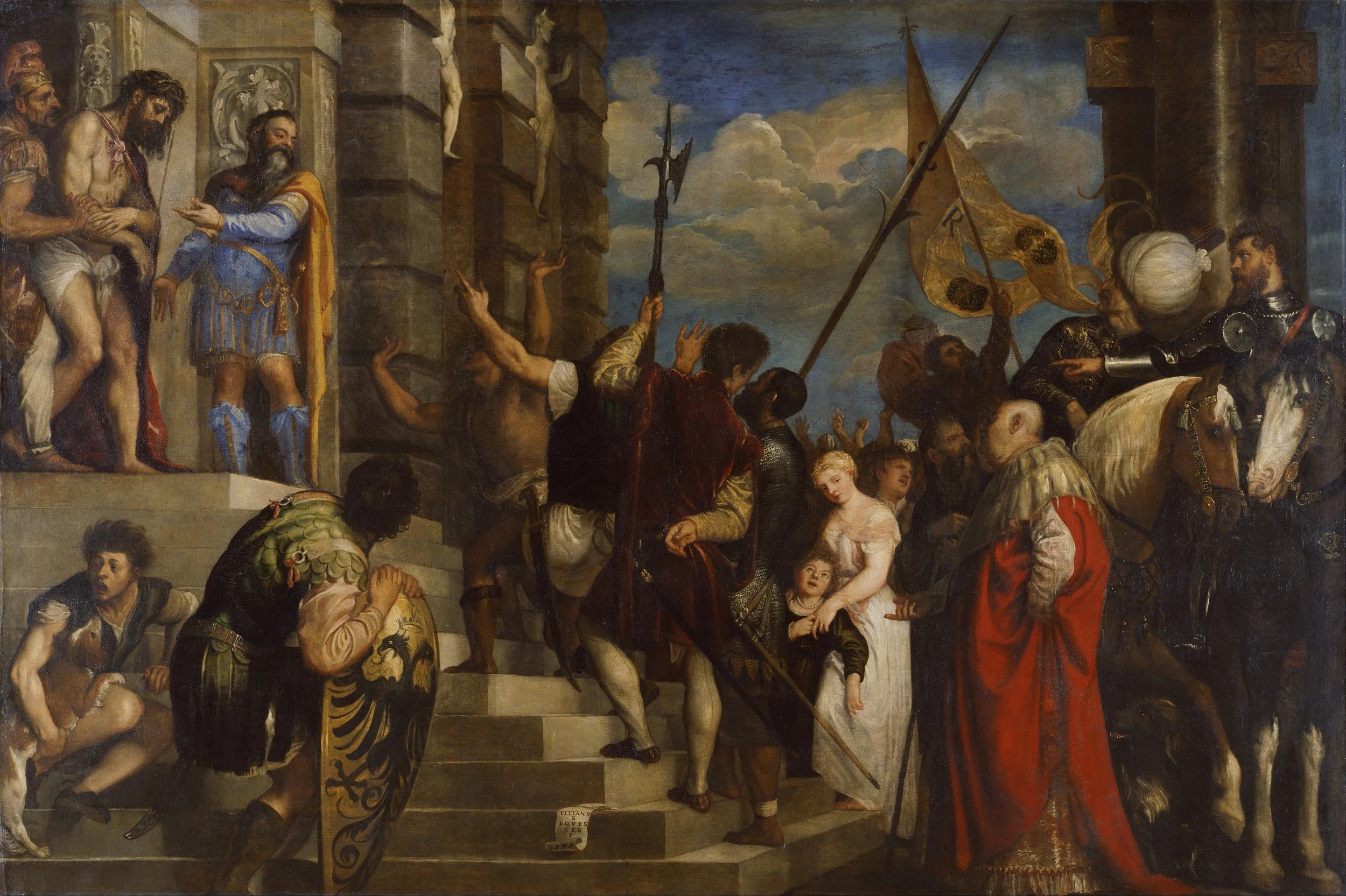
Ecce Homo.
Artist: Titian.
4 Pilate therefore went forth again, and saith unto them, Behold, I bring him forth to you, that ye may know that I find no fault in him.
5 Then came Jesus forth, wearing the crown of thorns, and the purple robe. And Pilate saith unto them, Behold the man!
6 When the chief priests therefore and officers saw him, they cried out, saying, Crucify him, crucify him. Pilate saith unto them, Take ye him, and crucify him: for I find no fault in him.
7 The Jews answered him, We have a law, and by our law he ought to die, because he made himself the Son of God.
Holy Bible, King James Version
John 19:4-7

Mass market paperback of Victor E. Frankl’s memoir relaying his experience in Nazi concentration camps and his psychotherapeutic method.

1970s Catholic Silver Cross.
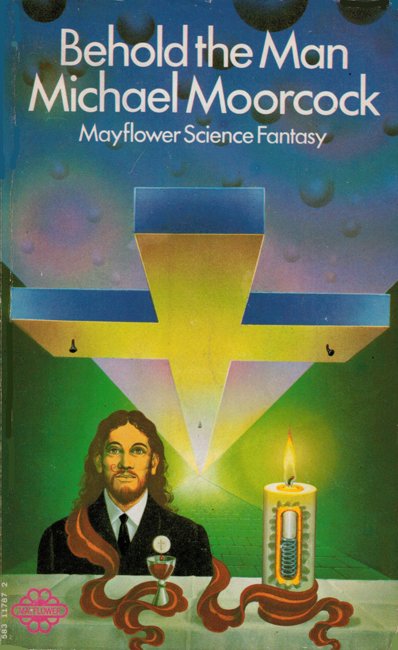
Mayflower Science Fantasy Paperback. (September 1970).
Cover artist: Bob Haberfield.

Avon/Equinox Trade Paperback (April 1976).
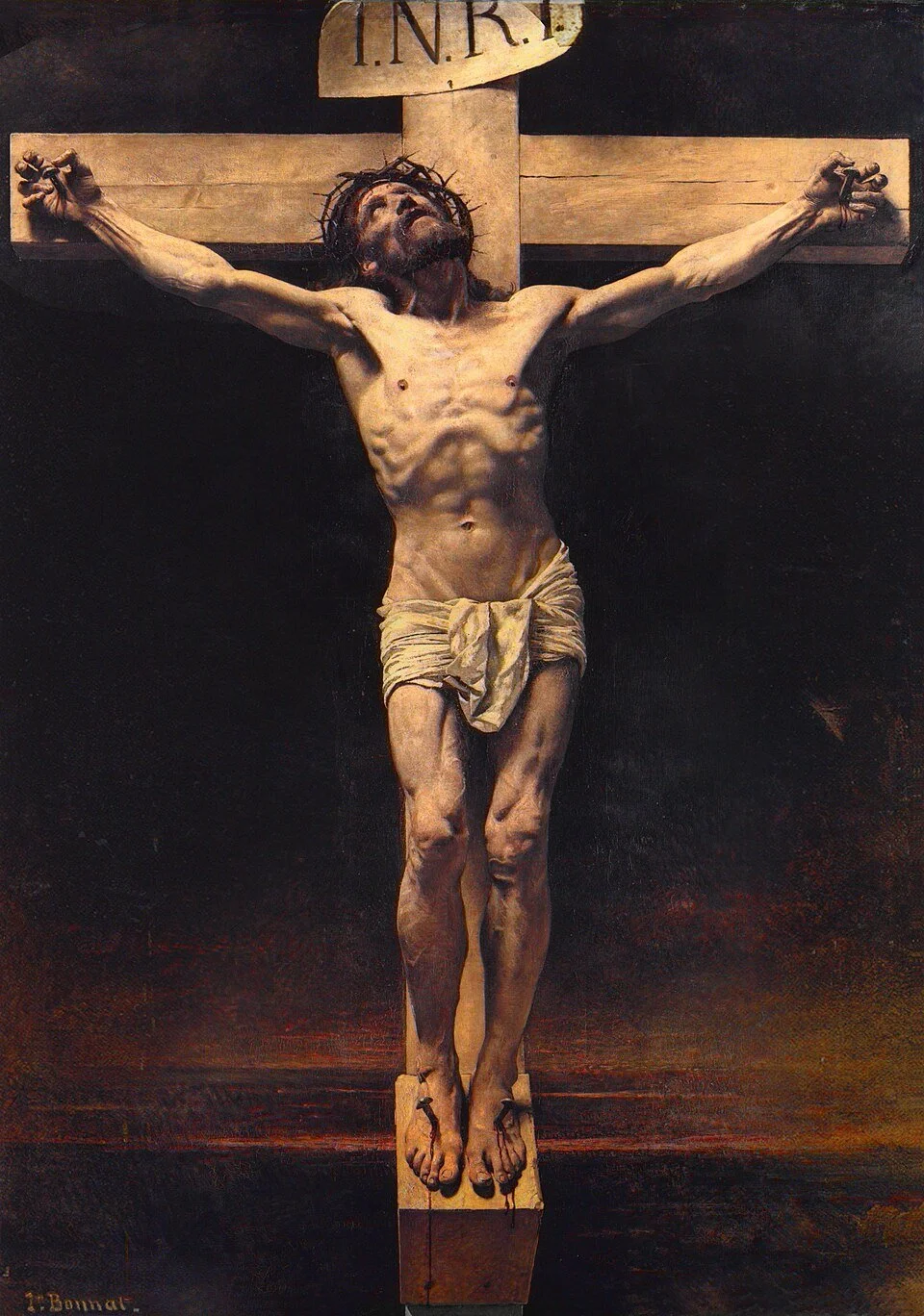
The Crucifixion.
Leon Bonnat.

London: Fontana Paperback. (October 13, 1980).
Cover artist: Walter Wyles.

23 page Marvel adaptation Unknown Worlds of Science Fiction #6 (November, 1975) by Doug Moench and Alex Niño. Cover artist: Frank Brunner.

London Grafton Paperback (October 23, 1986).
Cover artist: Geoff Taylor.
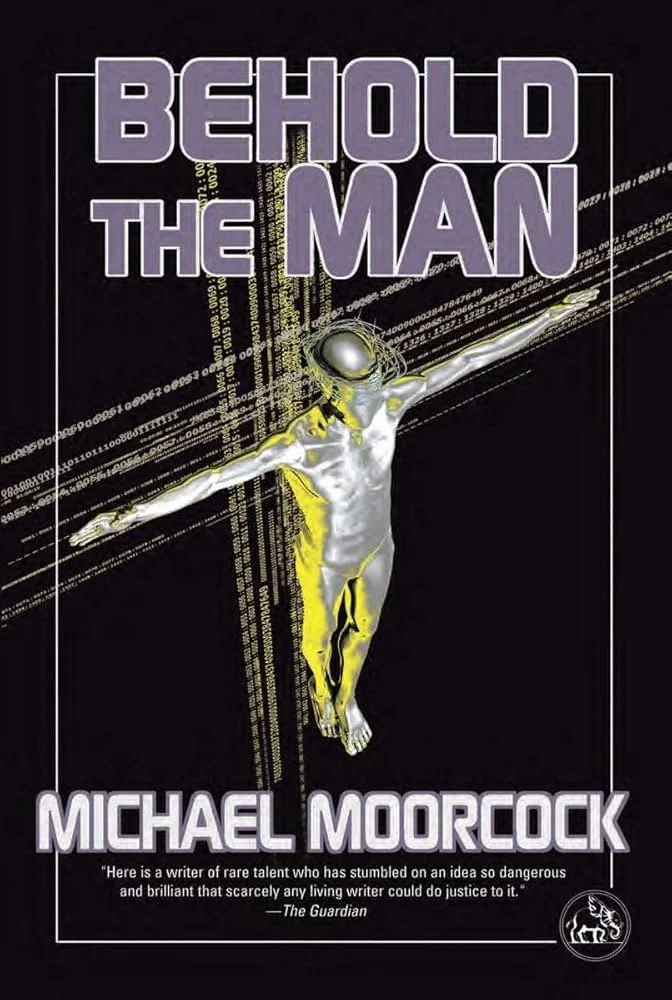
Woodstock, N.Y.: Overlook Trade Paperback 2007.
Cover artist: Aaron Kent.
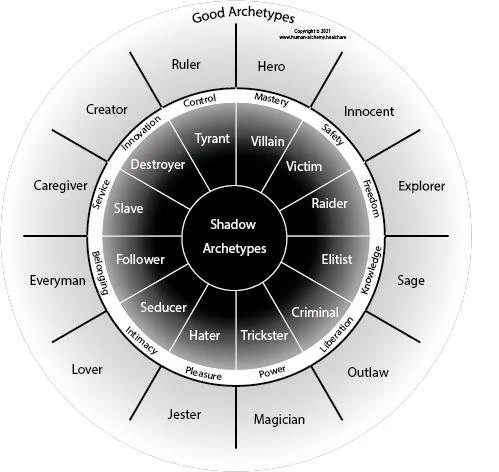
Jungian Archetypes.
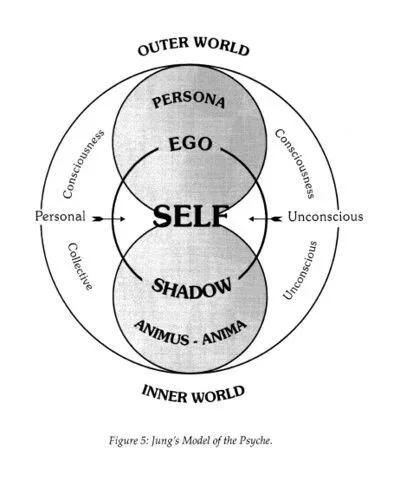
Jung’s Model of the Psyche.
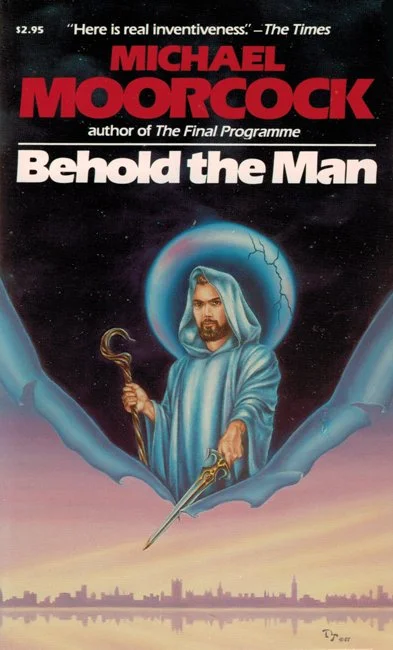
New York: Carroll & Graf Paperback, (October 1987).
Design Artist: Roy Colmer.
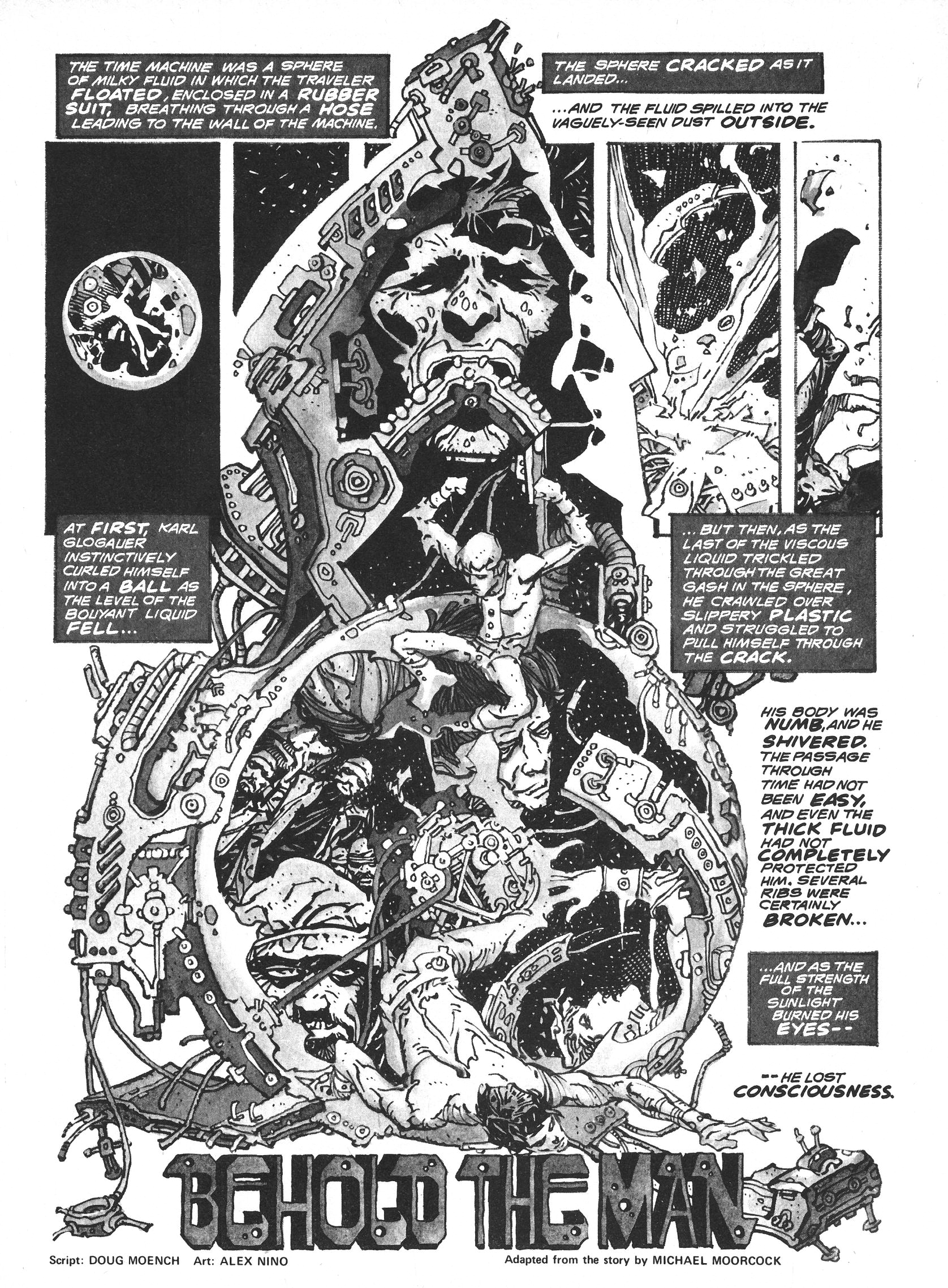
Check out this article by Alan Stewart describing the Marvel Adaptation of Behold the Man in Unknown Worlds of Science Fiction #6 (November 1975).
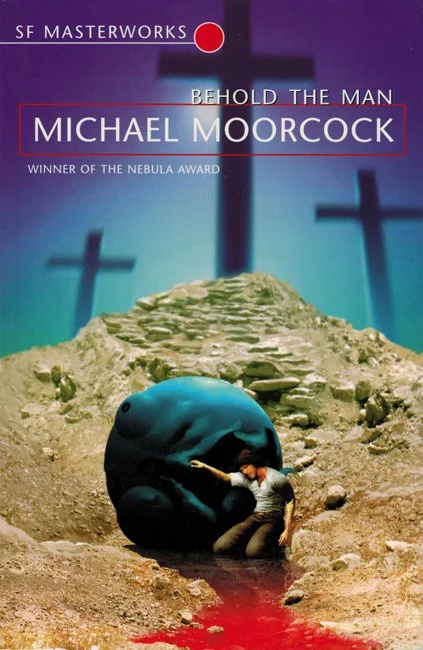
London: Millennium Trade Paperback (November 25th 1999). Cover artist: Jim Burns.

Reprint edition of London: Millennium Trade Paperback (1999).
Cover artist: Jim Burns.

London: Gollancz Trade Paperback. (June 12th 2014).
Cover artist: Geoff Taylor.
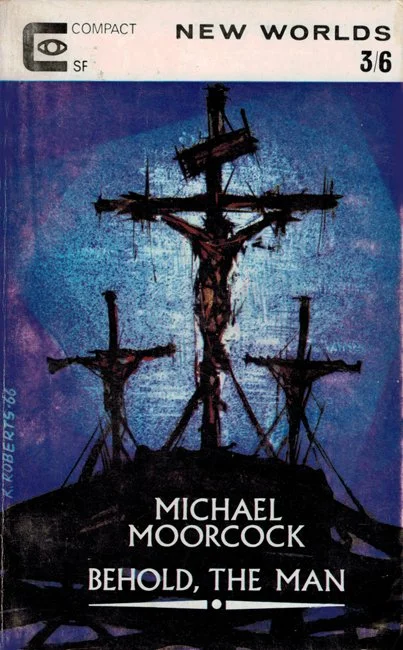
New Worlds No. 166, September 1966, ed. Moorcock;
Cover artist: Keith Roberts.

Author: Megan Taylor